Geocache Logbook KDP Interior Template: A Practical Evaluation
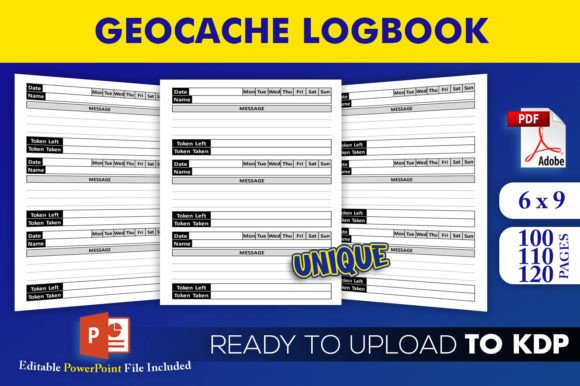
Creating a geocache logbook to sell on Amazon KDP or to use for personal printing projects often involves choosing between starting from scratch or using a ready-made solution. The Geocache Logbook KDP Interior Template bundle is one such shortcut, offering a pre-structured interior layout designed specifically for the geocaching community. The digital download typically includes an editable PowerPoint source file and three high-resolution PDF interiors tested on KDP, formatted at a 6×9 trim size with no bleed and provided in page counts of 100, 110, and 120 pages. For many, the appeal lies in its convenience, but a closer look at what the template does — and does not — provide can help you decide if it aligns with your publishing goals.
Why Someone Might Consider a Pre-Made Interior Template
Designing a print-ready logbook from scratch involves layout decisions, margin settings, and export tests that can consume hours, especially for those unfamiliar with publishing software. The Geocache Logbook KDP Interior Template removes much of this friction. With PDF files that have already passed KDP’s upload checks, you gain a head start on the technical side of self-publishing. The editable PowerPoint file adds another layer of flexibility, allowing you to insert a custom title page, add your name, or adjust subtle design elements without owning advanced design tools. For someone who wants to launch a geocaching logbook quickly — perhaps as a niche passive income product or a custom item for a geocaching event — this convenience can be a deciding factor.
Key Benefits and Practical Advantages
Beyond saving time, the template package offers several tangible strengths that merit attention.
- KDP-ready reliability: The PDF interiors are advertised as tested on KDP, which reduces the common frustration of file rejections due to margin or font embedding errors. You still need to check the final uploaded preview, but the baseline compatibility is a significant plus.
- Page count options: Having 100, 110, and 120 pages means you can release multiple versions of the same logbook or choose the thickness that best matches your intended use. A shorter logbook might suit a single event, while a longer one works for ongoing caching trips.
- No-bleed simplicity: Because the interior has no bleed, you avoid the extra steps of extending design elements beyond the trim line. This makes the template far easier to edit in PowerPoint without risking stray white edges during printing.
- Hi-resolution output: The promise of high-resolution interiors ensures that text, table lines, and any small icons remain sharp in the printed copy, which matters for legibility on the trail.
- Editable source file: The PowerPoint PPTX file allows non-designers to make basic modifications, add a logo, or change fonts. This level of control sits between a completely locked PDF and a fully custom design project.
Considerations and Tradeoffs Before You Buy
While the template shines in ease of use, it is not without limitations that become apparent depending on your expectations. First, the design is inherently generic. Because it is a template sold to multiple customers, an unmodified version may look similar to other logbooks on the market. Differentiation requires active editing in PowerPoint — and that software, while familiar, is not a professional layout tool. Complex adjustments like rearranging the log entry table, adding graphic page numbers, or changing the interior grid structure can be awkward.
The no-bleed format itself is a tradeoff. For a traditional logbook, this is perfectly acceptable and often preferred, but if you envision full-color illustrated backgrounds that extend to the page edge, you would need to switch to a bleed-style interior and likely a different design tool. Also, the template provides only three page counts. If your research shows that your target geocaching audience prefers a slimmer 60-page book or an extra-thick 150-page version, you may need to add or remove pages manually, which introduces the risk of misalignment or file rejection if not done carefully.
Another underappreciated point is the digital-only nature of the product. You are buying a file, not a printed book. This means you are responsible for the entire publishing workflow — uploading to KDP, managing the listing, ordering proofs, and handling any customer quality concerns. The template’s “tested on KDP” label applies to the file itself, not to the final printed output across all Amazon print facilities, which can vary slightly in trim accuracy and ink density.
When This Template Is a Strong Fit
The Geocache Logbook KDP Interior Template aligns well with certain user profiles and goals. If you are an aspiring KDP publisher who wants to test the geocaching niche without investing in custom design, the template provides a low-risk way to start. The ability to quickly produce three different page-count products can also help you split-test the market. Geocaching clubs and event organizers who need a clean, functional logbook for a meet-up or a seasonal challenge will find the 6×9 trim size comfortable to carry and the no-bleed design professional enough for a branded handout. Similarly, parents or teachers creating a treasure-hunt-style learning activity could adapt the template through the PowerPoint file to print a small batch at home. In all these cases, speed, simplicity, and a pre-tested structure outweigh the desire for total uniqueness.
When Alternatives Might Be Worth Exploring
On the other hand, some scenarios call for a more tailored approach. If you have a strong brand or a unique visual concept — perhaps a logbook integrated with topographic maps, QR codes, or wilderness illustrations — a bespoke design created in Adobe InDesign or Affinity Publisher will serve you better. The PowerPoint source file, while editable, cannot match the precision of a dedicated layout application when dealing with complex master pages or linked text flows.
You might also pass on this template if you plan to sell a premium, bleed-enabled logbook with soft-touch covers, spiral binding, or special paper types that go beyond KDP’s standard offerings. The template is optimized for KDP’s black-and-white interior printing on regular paper; any deviation from that specification may lead to formatting problems. Additionally, if you are building a logbook series with a consistent but highly recognizable house style, starting from a template that others can also buy makes it harder to establish a distinctive visual identity. In that case, investing in a custom interior layout — either by learning yourself or hiring a designer — becomes a strategic long-term decision rather than an expense to avoid.
Making the Right Decision for Your Project
Before adding this template to your cart, take a pragmatic look at your goals, skills, and intended audience. Ask yourself: Is this a one-off personal project or a product you want to scale? For a quick personal logbook, the PDFs alone might be enough; you simply upload and order a proof. For a commercial venture, you will likely want to customize the PowerPoint file, so your comfort with that software matters. If editing feels like a chore, consider whether the finished book will look sufficiently polished to compete with other logbooks in the geocaching category on Amazon.
Consider the page count logic. A 100-page logbook might hold around 150–200 entries depending on layout, which could be plenty for a casual geocacher but too few for a hardcore enthusiast who logs finds every weekend. By offering all three page counts as separate ASINs, you can partially address this, but you might also receive negative reviews if a buyer expects a thicker book than the listing indicates. The no-bleed format means the interior will have predictable white borders; for a no-frills logbook, this is a sign of reliability, not a flaw.
Finally, use the KDP preview tool critically when you upload. Even though the files have been tested, different trim sizes and cover configurations can shift the alignment. Order an author proof to see how the interior holds up under real-use conditions — can a pen write smoothly on the paper? Do the lines align as expected after binding? This final check ensures that what you deliver matches the promise of the template.
In essence, the Geocache Logbook KDP Interior Template is a practical entry point for anyone who values time-to-market and certainty over artistic freedom. It solves a well-defined problem: giving you a clean, printable logbook interior that works with the KDP ecosystem. Where it goes from there depends entirely on how you use the editable source file and whether you complement it with a compelling cover and accurate product description. By weighing the convenience against the need for differentiation, you can decide if this bundle is a building block that moves your geocaching or publishing project forward — or a convenient stopgap that will eventually be outgrown by bigger creative ambitions.