Exploring the Versatility of a Categories Board Game Book for KDP Publishing and Creative Play
Why a Board Game in Book Form Makes Perfect Sense for Modern Households
The concept of transforming a classic party game into a book format might raise an eyebrow at first, but there is a compelling logic behind it. A Categories Board Game Book combines the tactile satisfaction of pen-and-paper games with the structured convenience of a professionally bound volume. Instead of fumbling with loose cards, wrinkled score sheets, or misplaced instruction pamphlets, everything lives between two covers. This format appeals to families who want to reduce clutter, educators who need reproducible classroom materials, and anyone who appreciates having a grab-and-go entertainment option on the bookshelf. The KDP (Kindle Direct Publishing) platform has opened the door for independent creators to bring such niche products to a global audience, and a well-designed interior file is the backbone of that effort.
Understanding the Physical Specifications and Why They Matter
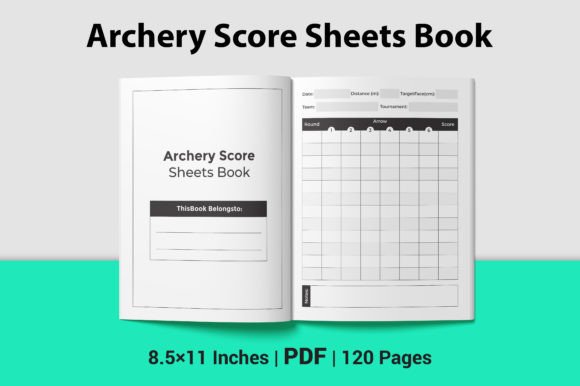
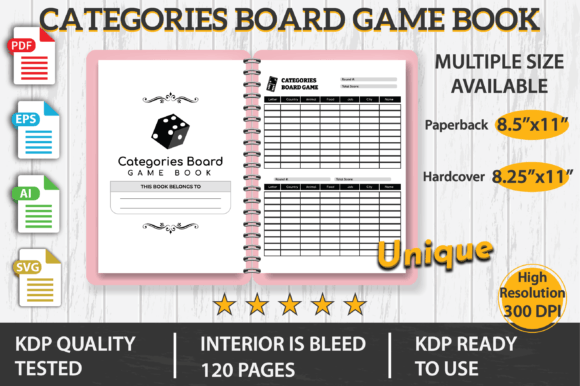
When examining a Categories Board Game Book KDP interior, the dimensions immediately signal thoughtful planning. The layout comes in two common variations: 8.5 x 11 inches (21.59 x 27.94 cm) and a slightly trimmed 8.25 x 11 inches (20.95 x 27.94 cm). Both sizes provide ample room for category grids, letter columns, and scoring sections without feeling cramped. The 120-page count strikes a practical balance. It provides enough material for repeated play sessions—potentially dozens of game nights—without becoming unwieldy or prohibitively expensive to print. The inclusion of bleed is particularly important. Full bleed means that colored backgrounds, decorative borders, or graphical elements can extend right to the edge of the page after trimming, giving the final printed book a polished, professional appearance rather than a sterile white-margin look.
The Importance of Bleed Settings in Print-Ready Files
Bleed is one of those technical details that separates amateur print jobs from professional results. In the context of a categories game book, bleed allows designers to use vibrant edge-to-edge backgrounds, themed decorative frames, or color-coded sections that visually distinguish different rounds or difficulty levels. When the file is properly set up with bleed, the printer trims slightly beyond the intended page boundary, ensuring no unprinted slivers appear along the edges. For KDP authors and publishers, getting bleed right means fewer returns, better reviews, and a product that matches customer expectations. The fact that the interior files have been tested on KDP with no errors is a significant reassurance for anyone who has experienced the frustration of upload rejections or unexpected print anomalies.
What the Editable Source Files Unlock for Creative Users
One of the standout features of this interior package is the inclusion of editable source files. The bundle typically contains PDF, EPS, Ai, and SVG formats. Each serves a distinct purpose. The PDF is the ready-to-upload file for KDP, requiring no further adjustments. The EPS and Ai (Adobe Illustrator) files give users full access to vector layers, enabling deep customization—changing fonts, adjusting grid sizes, replacing color schemes, or translating the content into another language. SVG files offer broad compatibility with various design software, including free alternatives like Inkscape. This flexibility means the book is not a static, one-size-fits-all product. A teacher could adapt the layout for a specific curriculum theme. A bilingual family could create a dual-language version. A designer could rebrand the entire interior to match a series of game books under a unified visual identity.
Practical Customization Scenarios
- Language localization: Open the Ai file and translate category prompts into Spanish, French, German, or any target language, expanding the potential market reach.
- Theme adaptation: Replace generic category headers with niche themes—movie trivia, historical periods, scientific terms, or holiday-specific topics for seasonal editions.
- Brand integration: Add a logo, website URL, or social media handle to the footer of each page, turning the book into a branded promotional tool.
- Difficulty scaling: Create separate versions with simplified categories for younger children or more challenging ones for adult game nights.
- Accessibility improvements: Increase font sizes, adjust contrast ratios, or use dyslexia-friendly typefaces to make the book more inclusive.
Who Benefits Most from a Ready-Made KDP Game Book Interior
The audience for a Categories Board Game Book spans a surprisingly broad spectrum. At one end are KDP publishers looking to expand their catalog with low-content or medium-content books that generate passive income. Game books occupy a sweet spot between blank notebooks and full-length novels; they provide structured interactivity that customers actively seek out. At the other end lie end users: hosts planning party entertainment, parents organizing screen-free family activities, and seniors looking for cognitive engagement tools. Between these poles sit educators, occupational therapists, and activity coordinators at community centers who all value reproducible game formats that require minimal preparation.
KDP Publishers and Passive Income Seekers
For self-publishers, the appeal lies in efficiency. Designing 120 pages of game layouts from scratch demands significant time and skill. Purchasing a tested, print-ready interior eliminates the design bottleneck. The publisher can focus on cover design, keyword research, and marketing rather than pixel-level adjustments. Moreover, the editable source files mean the publisher can produce multiple variants—different trim sizes, color schemes, or themed editions—from a single purchase, effectively building a product line.
Educators and Classroom Integration
Teachers constantly seek engaging activities that reinforce vocabulary, critical thinking, and collaborative skills. A categories game book fits neatly into language arts, ESL, or even subject-specific review sessions. The large 8.5 x 11 format allows students to write comfortably, and the 120-page count means a single book can serve multiple classes across an entire school year. With the editable files, an educator could tailor categories to align with lesson plans—think "Renaissance Inventions" for history class or "Chemical Elements" for science.
Families and Social Gatherings
The book format transforms game night logistics. Instead of one person managing a stack of cards and a timer, each player or team can have the book open to the current round. Pages can be photocopied (within the bounds of the purchase license) so that the original book remains pristine for future use. The intro page sets the tone and provides clear rules, which reduces the inevitable start-of-game confusion that plagues many party games.
Analyzing the Design Quality and Usability Factors
A unique and professional design is not merely an aesthetic claim—it directly impacts usability. In a categories game, players need to quickly scan column headers, locate their assigned letter, and write responses under time pressure. Cluttered layouts, inconsistent spacing, or fonts that sacrifice legibility for style undermine the experience. The professional design principle here involves clean grid structures, adequate white space, and a visual hierarchy that guides the eye naturally from the category prompt to the writing area. The inclusion of an intro page also demonstrates attention to user experience; first-time players should be able to understand the game flow without consulting external resources.
How the Print-Ready PDF Streamlines the Publishing Process
KDP has specific technical requirements, and files that deviate from these standards can trigger error messages or produce unsatisfactory print results. A PDF that has been explicitly tested on KDP and confirmed error-free saves publishers from the iterative trial-and-error cycle. The testing process typically verifies that page dimensions match the selected trim size, that margins respect the printable area, that fonts are embedded correctly, and that the bleed extends properly. For creators unfamiliar with the nuances of print production—RGB versus CMYK color spaces, image resolution standards, safe zones for text—having a verified file reduces the barrier to entry significantly.
Comparing the Two Common Trim Size Options
The availability of both 8.5 x 11 inches and 8.25 x 11 inches may seem like a minor variation, but it reflects practical market considerations. The 8.5 x 11 format is the standard US letter size, familiar and comfortable for American consumers. The slightly narrower 8.25 x 11 option can result in slightly lower printing costs on KDP, which charges by page count and physical dimensions. A marginally smaller trim size also fits more easily on bookshelves and in bags. Publishers targeting international markets where A4 is standard might use the editable files to create an A4 variant, but the included sizes cover the most popular North American formats well.
Storage, Portability, and Longevity Considerations
Unlike traditional board game boxes that deteriorate with repeated opening and closing, a perfect-bound or paperback game book holds up remarkably well over time. The 120-page count keeps the spine reasonably thin, preventing the book from being awkwardly bulky. For families who travel, a single book is far more portable than a full board game setup. It slips into a carry-on bag, a glove compartment, or a picnic basket. The pages can be used with pencils and then erased if the paper quality and finish permit, though many users prefer to photocopy or use separate sheets to preserve the original. This longevity factor contributes to the product's value proposition as a durable entertainment investment rather than a disposable item.
Potential Niches and Thematic Expansions
The base categories game format serves as a platform for endless thematic offshoots. A publisher could use the editable source files to create specialized editions targeting distinct demographics. A travel edition might feature categories related to geography and world cultures. A nostalgia edition could focus on decades-based topics that appeal to specific age groups. A professional development edition might incorporate industry-specific terminology for corporate team-building exercises. The foundation provided by the interior files means these variations require relatively modest design adjustments rather than full-scale redevelopment, making niche experimentation economically viable.
Examples of Thematic Directions
- Pop culture edition: Categories drawn from current movies, music charts, celebrity news, and streaming series for a younger, trend-aware audience.
- Academic subject edition: Disciplines like biology, literature, mathematics, and art history adapted into game categories for supplementary learning.
- Wellness and mindfulness edition: Categories centered on gratitude prompts, emotional vocabulary, positive affirmations, and personal reflection topics.
- Holiday collection: Seasonal editions for Halloween, Christmas, Thanksgiving, and New Year gatherings, each with themed visual designs and category sets.
- Multilingual practice edition: Categories designed to help language learners practice vocabulary retrieval under time constraints, reinforcing fluency through play.
Accessibility and Inclusivity Through Customization
The editable nature of the source files also opens doors for accessibility improvements that a fixed printed product cannot offer. Designers can increase font sizes for visually impaired users, adjust color contrasts for readability, or modify the grid layout to accommodate larger handwriting. The SVG and Ai formats support screen-reader-friendly exports when converted appropriately for digital use. While the primary distribution channel is print-on-demand through KDP, the versatility of the source files means the content can also be adapted into digital PDFs for tablets, creating a hybrid product that reaches users who prefer or require digital formats.
Evaluating Cost Efficiency for the Publisher
From a business perspective, purchasing a pre-tested interior represents a time-cost tradeoff. The hours saved on layout design, bleed configuration, and KDP error resolution translate directly into faster time-to-market. For publishers managing multiple titles, this acceleration compounds. The 120-page count falls within a reasonable manufacturing cost range on KDP, and the retail price can be set competitively while maintaining healthy royalties. Furthermore, the availability of multiple source formats future-proofs the investment; if the publisher later wants to redesign the cover, adjust the interior styling, or migrate to a different print-on-demand platform, the editable files provide the necessary flexibility.
The Role of the Intro Page in User Experience
The inclusion of an intro page might seem trivial, but it serves distinct functions. For a game book, the intro page typically outlines rules, scoring methods, and example rounds. This removes ambiguity and lowers the barrier for new players. From a KDP perspective, an intro page also contributes to the book's perceived value during the "Look Inside" preview that Amazon offers potential customers. A well-crafted intro page establishes credibility and helps the shopper quickly understand what they are purchasing, reducing the likelihood of returns due to mismatched expectations. It also provides a natural place for copyright information, usage guidelines, and a brief publisher note.
Long-Term Relevance and Evergreen Appeal
Categories as a game concept has remained popular for decades because the core mechanic—generating words that fit a category and start with a given letter—is timeless. It requires no specialized knowledge, no expensive components, and no technological dependency. The book format amplifies this evergreen quality. Unlike digital apps that may become incompatible with operating system updates, a printed book remains functional indefinitely. For KDP publishers, this means the product can generate consistent sales over years without requiring updates or maintenance, making it a reliable catalog addition alongside other low-content and medium-content titles.
Final Observations on Quality Assurance and Market Readiness
The assertion that the PDF file is high-quality and print-ready is substantiated by practical testing. A truly print-ready PDF embeds fonts, uses correct color profiles, maintains sufficient resolution for all graphical elements, and respects trim and bleed specifications. When a file passes KDP's automated checks without errors, it signals that these technical benchmarks have been met. For the end customer, this translates into a book that looks indistinguishable from traditionally published game books. The pages lie flat enough to write on, the grids align properly across spreads, and there are no unsightly white borders where full coverage was intended. In a competitive marketplace where product photos and previews drive purchasing decisions, this level of polish is not optional—it is foundational to building a brand that customers return to and recommend.