A Practical Guide to Using the Dog Mazes Puzzle Book in Creative Workflows and Daily Focus Routines
Ready-made design assets have shifted from a convenience to a core part of many professional and personal projects. The Dog Mazes Puzzle Book is a digital download containing 50 dog-themed maze puzzle pages, solution pages, and multiple file formats. It fits directly into publishing workflows, educational planning, and content creation pipelines. Instead of spending hours sketching paths and adjusting line weights, you start with a consistent, print-ready set and adapt it to your needs. This article looks at where these activity pages can sit within broader processes, how they interact with other tools, and what you need to know to integrate them smoothly into your work or personal routine.
Understanding What’s Included and Why the Format Matters
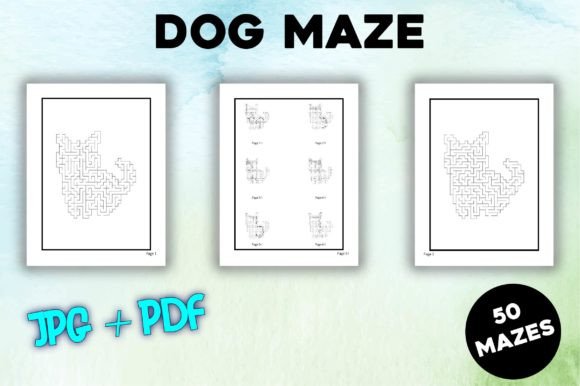
The package provides one PDF with all maze pages and solutions ready to print, plus 50 high-quality JPG files and the 50 corresponding maze designs. The PDF acts as a master document for quick reviewing or assembling a full book, while the individual JPGs give you granular control. File organization becomes straightforward: keep the PDF for proofing and the JPG folder for page-by-page insertion into design software. The large 8.5 x 11 inch dimensions match standard coloring and activity books, eliminating resizing guesswork. The thick dark lines and high resolution ensure that when printed, the lines stay crisp, which directly reduces quality complaints if you use these pages in a commercial product.
Solutions are included for every maze. That small addition transforms the asset from a pure puzzle collection into a complete book section. You can place answer keys at the end of your publication without having to solve each maze or reconstruct paths yourself. In terms of workflow, that can save anywhere from thirty minutes to several hours, depending on how many solutions you would otherwise need to verify manually.
Where the Dog Mazes Puzzle Book Fits into a Content or Publishing Pipeline
For KDP publishers, the most direct use is assembling a full activity book. You import the PDF or individual JPGs into a book template, arrange the mazes in the order you want, intersperse solution pages, add a title page and a copyright notice, and the interior file is nearly complete. Because every maze follows a uniform visual style, you avoid the jarring inconsistency that can occur when sourcing puzzles from multiple designers. The theme — dogs — also gives you a clear niche for keyword targeting and cover design, which simplifies the product creation process from idea to launch.
Beyond direct book creation, these activity pages can serve as filler content for larger publications. If you produce journals, planners, or coloring books for adults, a few maze pages at the back can increase perceived value without requiring additional design work. The individual JPG files make this modular: drag and drop a maze between habit tracker pages or after a monthly calendar. You can batch this in software like Canva, Affinity Publisher, or Adobe InDesign, layering the maze as a full-page image behind a simple border. Because the line art is already thick and high-contrast, you don’t need to adjust levels or run extra sharpening filters before export.
Integrating Mazes into Educational and Therapeutic Settings
Teachers, tutors, and therapists often need quick, off-screen activities that support focus and fine motor control. The dog theme has a broad appeal across age groups, and mazes naturally engage problem-solving skills. For a classroom warm-up or a therapy session transition, printing a few pages from the PDF takes seconds. You can keep a binder of pre-printed mazes organized by difficulty — though here the difficulty is mostly uniform, the consistent design makes them easy to pair with other graded materials. Combine a maze with a short writing prompt about the dog character to create a mini cross-curricular exercise. The solutions let students self-check, which encourages independent work.
When using these pages repeatedly, consider laminating a set or slipping them into dry-erase pockets. The thick lines remain visible through the plastic, and the 8.5 x 11 size fits standard pockets. That extends the life of a single printout and fits a reusable resource model that many educators prefer. Organize the digital files in a cloud folder so you can reprint specific mazes on demand without hunting through a full collection each time.
Using the Activity Pages as Engagement Tools in Marketing and Community Building
Bloggers, email newsletter authors, and social media managers can use individual mazes as lead magnets or engagement boosters. Offering a free printable maze in exchange for an email subscription works well because it’s a low-friction download with immediate gratification. The JPG format means you can resize the maze for a preview image without losing clarity, then deliver the full-quality PDF or a single-page PDF as the download file. Make sure the license terms allow this commercial use — since the product is designed for KDP businesses, it typically includes broad rights, but verify before using the files in promotional material.
For in-person events like dog-themed fundraisers or adoption drives, a printed stack of maze pages keeps kids or even adults occupied at a booth. Since you own the digital files, you can print as many copies as needed without per-unit fees. Keep a folder named “Event Printables” with a selection of 5 mazes rotated regularly to keep the offering fresh.
Building a Focus and Mindfulness Practice with Mazes
Adults looking for a screen-free focus break can use the Dog Mazes Puzzle Book as a portable mindfulness tool. Solving a maze requires a moderate level of concentration that pulls your attention away from rumination without the cognitive load of complex puzzles like crosswords. The dog illustrations add a playful, calming element. Keep a few printed sheets on your desk or in a notebook, and when you feel your attention fragmenting, spend three minutes navigating a path. The included solution at the back of the PDF means you never get stuck; if you hit a frustration point, you can check the answer and move on, which keeps the activity low-stress.
From a process standpoint, pairing mazes with other focus techniques like the Pomodoro method can yield better results. Use a maze as a transition activity between deep work sessions. Because the files are already organized, you can print a booklet of 10 mazes and staple it together, creating a personal focus companion that lasts for weeks.
File Management and Quality Control for Long-Term Use
When you download the 100 files (PDF, 50 JPGs, and the 50 maze designs with solutions baked into the PDF), immediate organization prevents future frustration. Create a main folder named “Dog Mazes Puzzle Book” with subfolders for “Print-Ready PDF,” “JPG Mazes,” and “Solutions Reference.” This structure lets you find a single maze image in seconds rather than scrolling through a flat list of file names. If you use cloud storage, sync that folder so all devices have the latest version.
Quality control starts with a test print of the first and last pages from the PDF on your intended paper stock. Check that the lines are solid black, the paper doesn’t bleed through excessively, and the image aligns to the margins as expected. For KDP print-on-demand, you would upload the PDF to the KDP previewer and flip through every page virtually. Because the source files use thick, high-resolution line art, you are unlikely to encounter low-resolution warning flags from KDP’s automated checker, but still verify the preview. If you plan to use the JPGs in other software, ensure that your document dimensions match 8.5 x 11 inches at 300 DPI to avoid compression artifacts.
Adapting the Dog Mazes Puzzle Book Across Multiple Projects
One digital purchase can support several distinct outputs. A single set of 50 mazes can become a standalone activity book, a bonus section in a larger puzzle compilation, a series of printable worksheets for a dog-training business, or monthly freebies on a blog. The key is to keep a master record of where each maze has been used so you don’t accidentally duplicate content too frequently. A simple spreadsheet tracking maze number, the project it appeared in, and the publication date prevents overlaps and helps you rotate fresh content for your audience.
If your workflow involves collaboration, the digital format shines. Share the subfolders with a designer who handles layout, an editor who checks solution accuracy, or a virtual assistant who manages KDP uploads. Because the files have consistent naming (assuming they are numbered or organized), communication around specific pages stays clear. All parties work from the same high-resolution source, reducing version mismatches.
For those who create physical products beyond books, the mazes can be printed on cardstock, cut to size, and used as custom postcards or greeting card inserts. The thick lines handle slight scaling well, so reducing to A5 size usually maintains legibility. Always test a scaled-down print before committing to a large batch, as the maze paths need to remain clearly distinguishable.
Keeping the Asset Fresh and Combining It with Other Tools
While the Dog Mazes Puzzle Book provides 50 unique pages, you can extend its value by pairing it with other design resources. Overlay a maze onto a subtle textured background or add a decorative border in your design software to create a page that feels new without altering the core maze. Combine three mazes into a “triple challenge” spread. Because you work from a clean, isolated line-art JPG, you maintain full creative control over the surrounding elements.
If you later decide to create a series, the uniform style of this set makes it easy to intermix with other themed maze packs as long as line thickness and art style match. When vetting additional puzzle assets, compare the line weight to the samples from this set to avoid visual inconsistency. This attention to consistency directly impacts how professional your final product appears.
Ultimately, the Dog Mazes Puzzle Book removes a repetitive design task and gives you a versatile, organized base for multiple workflows. Whether you publish books, teach classes, build email lists, or simply want a structured mental break, having 50 ready-to-print mazes with solutions reduces friction and lets you focus on execution rather than production delays. Integrate it into your project cycles, treat the files as a reusable resource, and maintain simple organizational habits to get the most from it over time.