Build Better Routines with a Daily Habit Tracker Printable Template
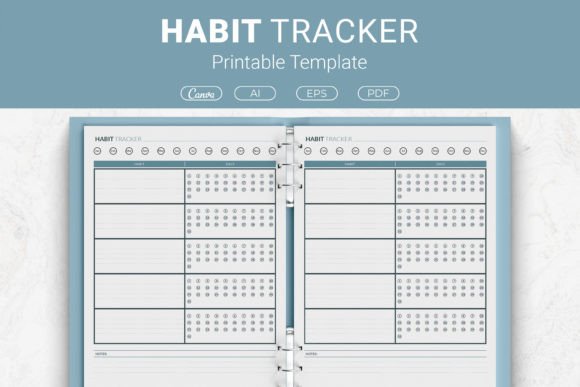
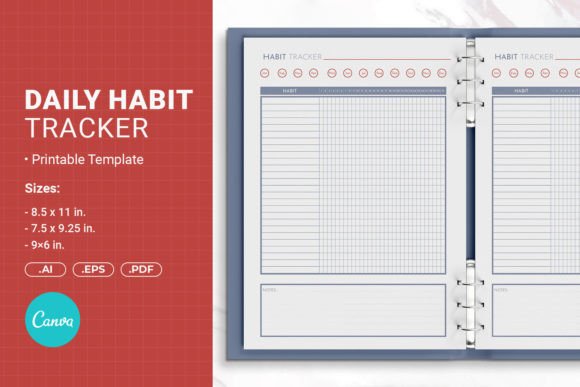
Most habit-building advice overlooks one simple truth: the tool you use shouldn’t get in the way. A Daily Habit Tracker Printable Template strips away app notifications, subscription fees, and screen fatigue, giving you a clean, physical space to record what matters. Whether you’re tracking water intake, study hours, creative practice, or client follow-ups, having a structured yet flexible page keeps you honest without overwhelming you. This isn’t just another PDF. The design offers three different sizes, a safe margin for hole punching, and files ready for print or direct upload to Amazon KDP. That versatility means the same template can serve a college student building morning rituals, a freelance illustrator juggling deadlines, or a small business owner creating a product to sell.
What Makes a Printable Habit Tracker So Practical?
Digital tools promise convenience, yet many people find that opening an app adds friction. A paper tracker lives on your desk, inside your binder, or next to your coffee maker—no login, no battery, no distraction. The difference feels immediate. But the Daily Habit Tracker Printable Template goes further than a simple notepad. It arrives with fully editable source files (AI, EPS), a ready-to-print PDF, and a Canva link, so you can tailor it without starting from scratch. That means someone who hates graphic design can print it right away, while a creator who loves to customize can tweak colors, fonts, or add branding in minutes.
Another overlooked feature is the binding-ready layout. Many printable planners neglect the inner margin, causing punched holes to slice through your tracking boxes. Here, a deliberate safe zone keeps everything intact when you add it to a ring binder or discbound notebook. It’s a small detail that signals the template was built by someone who actually uses paper tools.
Different Goals, Different Trackers
Why does the same template appeal to such a wide range of adults? Because a habit tracker is only as good as the intention behind it. The way a person uses it depends entirely on what they’re trying to accomplish.
Personal Accountability for Everyday Folks
For someone who simply wants to build a consistent morning stretch, remember to floss, or read ten pages a day, simplicity is the priority. A clutter-free layout with clearly marked days and checkbox-style entries helps them see patterns at a glance. They might print the 6×9 inch version on heavy paper, slip it into a budget binder, and fill it out with a favorite pen. There’s no learning curve, no setup, and no recurring cost. Over time, those filled rows become a visual record of small wins, which is far more motivating than a streak on a screen.
Productivity Hacks for Professionals and Freelancers
Professionals, from remote workers to project managers, often use habit tracking to monitor deep work sessions, skill-building minutes, or non-negotiable daily tasks like checking client emails. Here, the 8.5 x 11 inch size makes sense because it offers more room for note sections or additional columns. A freelance writer could track pomodoro cycles, word count, and one self-care habit all on the same page. The template’s ability to stay legible after hole-punching also means it fits into a standard office binder alongside meeting notes and project timelines. No need to juggle a separate planner.
Creative Ventures and Product Creation
This is where the Daily Habit Tracker Printable Template becomes something entirely different. For Etsy sellers, low-content book publishers, and side-hustlers, the template is a raw asset. Thanks to the AI Illustrator and EPS files, a designer can expand the concept into a full habit journal, add watercolor backgrounds, or combine multiple trackers into a workbook. The PDF includes bleed, so uploading to Amazon KDP is straightforward—no margin headaches. A blogger might link it to a freebie library as a lead magnet; a coach could rebrand it as a client accountability sheet. In these cases, the value isn’t just personal tracking—it’s the commercial potential of a ready-to-customize product.
Teaching Tools for Educators and Coaches
Teachers, tutors, and wellness coaches frequently need straightforward tools they can distribute without worrying about copyright or branding issues. A habit tracker can help a student log independent reading minutes, a music teacher can track practice sessions for each pupil, and a life coach can use it to frame weekly goals during client check-ins. The three-size options let them pick a format that fits the setting—compact 6×9 cards for quick handouts, larger 8.5×11 sheets for classroom walls or coaching binders. Because the template is printable on demand, it’s a one-time investment that generates unlimited copies.
Choosing the Right Format for Your Project
Not all habits fit the same page. The template’s three sizes are more than cosmetic choices—they align with different use cases and binding preferences.
8.5 x 11 inches (215.9 x 279.4 mm) works well for a full-size binder or a clipboard. It gives maximum writing space, ideal if you’re combining daily tracking with notes or if you have vision needs that require larger text.
7.5 x 9.25 inches (190.5 x 234.95 mm) strikes a middle ground. It’s substantial enough to feel like a planner yet compact enough to carry. This size often appeals to those creating semi-custom notebooks for Etsy or KDP, as it feels deliberate and professional without being too common.
6×9 inches (152.4 x 228.6 mm) is the classic portable journal size. It fits in a handbag, backpack, or on a nightstand without taking over the surface. If you’re printing for personal use and value portability, this might be your sweet spot.
One underrated consideration is the flexibility of the safe margin for hole punching. This means a dot grid, line, or checkmark column won’t disappear into the binding. If you plan to archive your trackers in a binder for long-term reflection, that margin preserves the entire record. Combined with the instant availability of the PDF and Canva link, you can go from download to printed, punched, and ready in under five minutes.
From Printable to Profitable: A Tool for Creators and Small Businesses
Many readers won’t initially think of a habit tracker as a source of income, but the low-content publishing world thrives on exactly this kind of resource. The template is built for that path. It includes an AI Illustrator file (fully editable), an EPS file, a print-ready PDF with bleed, and a Canva link, which lets someone with zero Adobe experience still make professional tweaks. For a small business owner, these assets slash the time between an idea and a live listing.
Imagine someone who runs a mindfulness blog. They take the 7.5 x 9.25 Canva version, swap in a calming palette, add a few inspiring quotes, and now they have a branded 30-day habit challenge journal. They can sell it on Amazon KDP as a paperback planner or offer it as a freebie to grow an email list. An entrepreneurial parent might create a kids’ chore and habit tracker by adjusting the daily fields, then printing at home to test the market before scaling. The up-front effort is minimal because the structure is already there, and the licensing generally supports such use when you alter the files. The speed alone—from concept to publication—gives small publishers a competitive edge.
What Beginners Often Overlook
If you’re new to printable planners or self-publishing, the sheer number of file types might feel overwhelming. You don’t need to use them all at once. Start with the PDF and print a single page. See how you like the layout, which size feels right, and whether you prefer filling it in with pencil or gel pen. That low-stakes experiment tells you more than any tutorial. If you later decide to customize, the Canva link is the gentlest on-ramp—drag-and-drop editing, no software installation needed. The AI and EPS files are there for when you’re ready to explore deeper design changes or want to work with a professional print service.
Conversely, experienced users might jump straight into the Illustrator file, setting up master pages for bulk printing or altering the tracking categories entirely. A graphic designer could build an entire suite of coordinating templates—mood trackers, expense logs, meal planners—using the same design language. The template’s open-source nature means it can serve as a foundation rather than a finished product.
Long-Term Use and Reliability
A one-off purchase becomes more valuable when it rewards repeated use. Every January, instead of buying a new dated planner, you can print fresh tracker sheets. Need a different size for a new binder? Simply open the appropriate file. That repeatability matters for budget-conscious individuals who find pre-printed planners expensive or restrictive. It also appeals to anyone trying to reduce waste, as you print only what you’ll actually use, and you can recycle pages at year’s end.
From a small-business angle, reliability translates to speed. A template that’s already formatted with bleed and safe margins saves hours of trial and error. When you’re responding to a trend or launching a seasonal planner, being able to output a polished file in a day instead of a week directly affects your bottom line. The technical details—correct dimensions, hole-punch margin, CMYK-ready PDF—are already handled, so you don’t risk Amazon KDP rejection due to formatting errors.
Finally, think about the emotional longevity. A habit tracker that sits in a binder, gradually filling with check marks, becomes a quiet archive of personal growth. It’s not just a productivity tool; it’s evidence of progress. The same template that helped a new freelancer track cold calls can later be customized by that same person into a workshop handout for their own clients. That kind of versatility is rare in a simple printable.
Whether you’re staring at a blank screen wondering how to stop doomscrolling at night, or you’re a coach with a roster of clients who need visual accountability, the Daily Habit Tracker Printable Template meets you exactly where you are. Print it as is, tweak it in Canva, or build something entirely new from the source files—the choice shifts based on your skills, your goals, and the people you want to help.