Habit Tracker Printable Template
Most people don’t struggle to set goals. They struggle to remember them by Thursday afternoon. A habit tracker printable template changes that. It’s a single sheet of paper that asks you to show up, day after day, and put a small mark next to the things you said mattered. It’s low-tech, intentional, and surprisingly powerful for anyone tired of notifications that don’t change behavior.
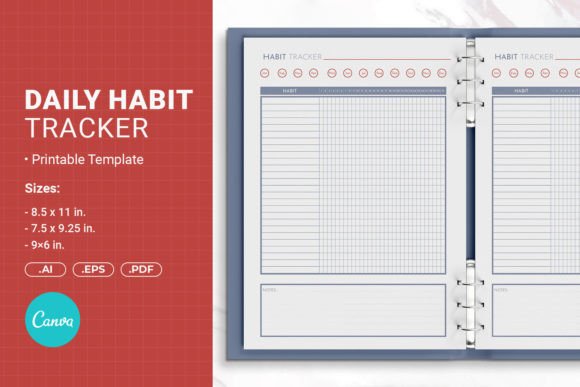
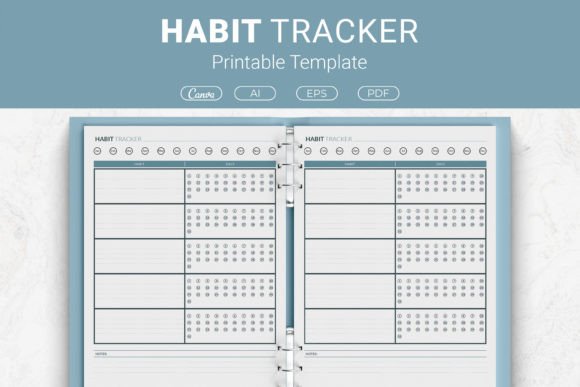
Instead of another app vying for your attention, you get a clean printed page with space for five habits, a grid of dates, and nothing else. You decide what goes on it, what each square means, and whether it ends up on the fridge or inside a planner. This particular template comes ready to use across multiple sizes and formats, but its real strength isn’t the file type — it’s the friction it removes between you and a more consistent life.
Why Paper Still Wins in a Digital World
Phones buzz. Apps send reminders that you can swipe away without thinking. A printable habit tracker sits on your desk or kitchen counter with zero opacity. You can’t ignore it while scrolling. The act of physically crossing off a box or coloring a circle creates a tiny moment of satisfaction that tapping a screen rarely matches. That’s why so many people who start with an app eventually end up printing a sheet anyway.
There’s also the cognitive offload. Knowing you don’t have to remember whether you stretched, read, or drank enough water becomes a quiet relief. The paper holds that mental load. Each evening, you glance at the tracker, fill in what you did, and immediately see a pattern forming. After two weeks, those blank spaces start to feel like a conversation you don’t want to have with yourself. That gentle accountability is hard to replicate with push alerts.
Who Finds Value in a Habit Tracking Sheet
The audience for this tool is wider than self-help enthusiasts. A freelance writer uses it to track deep work blocks and midday movement. A small business owner monitors daily outreach calls and bookkeeping check-ins. A homeschooling parent tracks reading time with each child alongside their own hydration and mindfulness practice. A college student balances study hours, sleep consistency, and social media limits. None of them need a complex system — they need something visual that lives where they’ll actually see it.
KDP publishers and stationery creators look at the same template differently. For them, it’s a commercial asset. The included AI Illustrator files, EPS, and PDF versions mean they can upload a clean book interior without starting from scratch. They can tweak colors, add branding, or embed the sheet into a larger planner bundle. It’s not just a habit tracker printable template — it’s a ready-to-license layout that saves hours of design work.
Different Places a Habit Tracker Shows Up
You’d be surprised where these pages end up. In a physical therapy clinic, a patient tracks daily stretches and pain levels on a custom-printed version. A manager keeps one in a team binder to note whether they gave positive feedback each day. A wedding photographer uses it during busy season to monitor sleep, water intake, and editing hours — because burnout doesn’t announce itself until the work stops.
At home, the template might be pinned inside a pantry door, tracking family chores or budgeting check-ins. A musician might log practice minutes and ear training. Someone navigating a health recovery uses it to track medication timing, gentle walks, and gratitude. The versatility isn’t just about the five habit slots — it’s about how each person fills them with the specific, mundane actions that actually move the needle.
Customizing the Template Without Design Skills
One underappreciated detail is the Canva template link included in this package. You don’t need to know Illustrator to swap colors, change fonts, or replace the header text with your own habit categories. If you want a morning routine tracker in soft pastels, you can make that happen in ten minutes. If you prefer bold monochrome for a minimalist bullet journal, that’s just as easy.
This flexibility matters because a habit tracker that feels like yours gets used more consistently. The base template provides structure — five rows, month grid, clean spacing — but the customization layer lets you align it with your aesthetic or accessibility needs. Larger font for low vision? Done. Softer contrast for an evening review? No problem. You’re not stuck with someone else’s design sensibility.
Sizes That Fit Real Bindings and Spaces
People rarely think about paper size until they print something that doesn’t fit their binder. This template avoids that annoyance by offering four sizes: US Letter (8.5 x 11"), A4 (210 x 297 mm), a compact 7.5 x 9.25", and a portable 6 x 9". You can print the larger ones at home and hole-punch them for a standard household binder. The small sizes slip into a traveler’s notebook or a repurposed journal cover without trimming.
For someone building a custom planner, those size options mean fewer formatting headaches. They can drop the 6x9 inch file directly into a KDP-ready book and know the margins will work. That’s the kind of practical detail that separates a generic PDF from a well-considered product.
When the Habit Tracker Becomes a KDP Planner Interior
If you’ve ever browsed the productivity section on Amazon, you know habit tracker pages are in high demand. But creating a clean, printable interior that formats correctly across multiple trim sizes takes time. This package is built for that purpose. The open-source AI Illustrator files let you deconstruct the layout, batch-edit across pages, and repurpose the grid into a year-long journal. The EPS and PDF files are essentially print-ready proofs.
For a side hustler publishing their first low-content book, that’s a massive head start. They can focus on cover design and marketing instead of rebuilding a tracker they could have licensed. Even someone who just wants to offer a freebie on their coaching website can quickly brand a Canva version and distribute it as a lead magnet. The commercial versatility lowers the barrier between having an idea and shipping something useful.
Personal Use: From Cluttered Mind to Crisp Morning
Let’s talk about what happens on a Tuesday evening. You’ve worked, cooked, scrolled, and now you’re trying to remember if you actually did anything for yourself. With a habit tracker printable template already filled out for the month, you look at the row labeled “Evening walk.” Yesterday it’s marked green. Today it’s still blank. You still have time. That’s not a burden — it’s a nudge.
That small sequence, repeated over weeks, starts to reshape how you view your own reliability. You begin stringing together streaks not because you’ll win a prize, but because you don’t want to break them. The reward is entirely internal: “I’m someone who does what I said I’d do.” And the template doesn’t judge — it just records.
Using Colors to Say More Than Words
The five-habit layout encourages a color-coding system that tells a story at a glance. One user might use blue for physical health, yellow for creative work, and orange for relationship habits. After a month, the page resembles a mosaic. You can see which areas of life received consistent energy and which ones faded. That visual pattern recognition works faster than reading a journal entry.
Parents with young kids sometimes turn this into a family art moment. Each child chooses a color for their chore or reading tracker. The fridge becomes a shared accountability board where everyone sees the effort. It sounds simple, but shared visual tracking changes household tone. Siblings start noticing each other’s consistency without being told.
What to Consider Before You Print
Overloading a page is the most common mistake. The template deliberately limits you to five habits because attention is a limited resource. If you try to track twelve things, you’ll likely abandon the whole sheet by day four. Start with three non-negotiable habits and two aspirational ones. The aspirational items can become non-negotiable later, but only after they’ve survived a month on paper.
Also, choose habits that are clear and observable. “Be more mindful” doesn’t translate well to a checkbox. “5-minute breathing exercise” does. The more concrete the action, the less internal debate you’ll have when it’s time to mark it. That clarity also keeps you honest. You either did it or you didn’t — the paper accepts both.
Consider placement. A tracker stuck in a drawer is a forgotten tracker. Tape it to the bathroom mirror, slide it into a clear front pocket of a binder, or clip it to your dashboard. Visibility is oxygen. If you’re using it commercially, think about how your customer will place it. Adding a cover page that suggests “Place somewhere you’ll see it daily” can improve their experience.
Beyond the Month: What the Tracker Actually Cultivates
Something shifts when you have a month of consistent data. You realize that missing one day didn’t derail anything — but missing three in a row started a drift. You notice that your low-energy habits survived while ambitious ones struggled, and you adjust accordingly. The template becomes a mirror, not a taskmaster.
This reflection matters for educators using trackers with students, or coaches using them with clients. The conversation moves from “try harder” to “what does the pattern tell us?” That’s a far more effective question. And when someone feels ownership of their own tracking sheet, the motivation becomes intrinsic much faster.
A Quiet Companion for Unpredictable Seasons
Life doesn’t stay neat. During a busy season — moving, starting a new job, caring for a family member — a habit tracker can slip from aspirational to essential. It becomes a way to preserve a few stabilizing routines when everything else feels upended. A healthcare worker during a stressful rotation might track only sleep, water, and one grounding moment each day. That’s enough. The template holds space for survival mode without demanding perfection.
Later, in a calmer chapter, the same template can expand into creative habits, learning goals, or side project consistency. It flexes because the user fills the content. The structure is always there, waiting for the next iteration. That’s why people often keep a digital folder of the original files — they reprint a fresh sheet when a new need emerges.
Making It a Long-Term System Instead of a Quick Fix
Habit tracking works best when it’s part of a larger rhythm. Pair the printable with a monthly review page, a goal planner, or a simple journal. At the end of the month, spend ten minutes looking at which habits stuck and which ones need a different approach. Maybe “exercise” is too vague; next month, it becomes “10-minute walk after lunch.” That refinement process is where real growth hides.
You can also rotate habits. Track five specific actions for a month, then switch to another set. This prevents the tracker from becoming stale wallpaper. The static template becomes dynamic because you change what’s being tracked. Consistency with the practice matters more than consistency with any one habit.
For those creating bundles or selling planners, consider including a brief guide about this rotation method. Customers appreciate context, and it sets your product apart from a bare-bones download. The template is the tool; your insight makes it usable.
The Understated Value of a Visual Streak
There’s a quiet confidence that comes from looking at a fully colored row of squares. You didn’t post it online. You didn’t get a badge. You just showed up for yourself repeatedly. That evidence becomes a psychological anchor when motivation wanes. Future you, on a tough day, can glance back and think, “I’ve done this before. I can do it again.”
This is why a simple, well-designed habit tracker printable template continues to circulate among people who could easily download a free app. The paper offers something permanent that digital streaks don’t — a tangible artifact of effort. It can be dated, filed, and revisited years later as a snapshot of a season. That’s a gift no notification can replicate.