The 2024 Mental Health Self-Care Planner: Designing a Year of Intentional Well-Being
Over the past few years, self-care has moved from a buzzword to a non-negotiable pillar of everyday life. For adults balancing demanding careers, creative side projects, family responsibilities, and the constant hum of digital connectivity, burnout is not a distant possibility—it is a recurring reality. The 2024 Mental Health Self-Care Planner steps into this space not as a magic solution, but as a structured, flexible tool that helps you reclaim attention, monitor emotional patterns, and build small, restorative habits across an entire year. Whether you are a freelancer managing irregular hours, a business owner navigating high-stakes decisions, or a marketer juggling deadlines, this planner turns the abstract idea of “looking after yourself” into a daily, trackable practice.
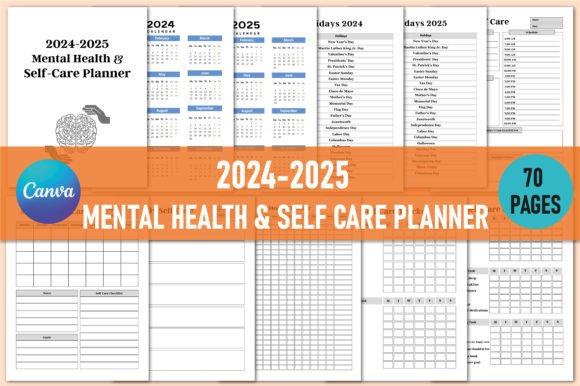
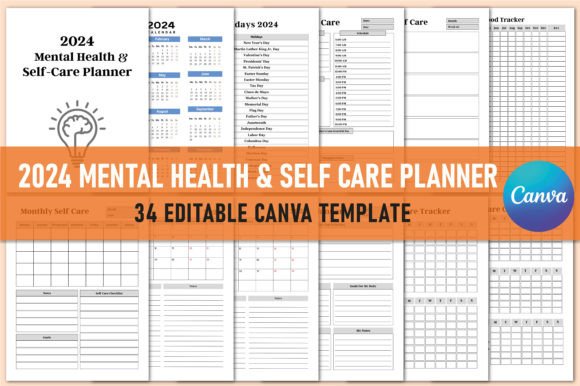
What sets this particular resource apart is its dual identity. You receive a meticulously designed print-ready PDF, yet you also gain access to an editable Canva template. This combination speaks directly to modern user expectations: we want high-quality physical tools we can hold, write on, and disconnect with, but we also appreciate the ability to personalize pages, add digital touches, or adjust layouts before hitting print. The package includes 34 distinct templates, all sized at 8.5 x 11 inches with 300 DPI resolution, CMYK color, and no bleed—specifications that ensure a professional finish whether you print at home, take the file to a local shop, or use an online service.
Why a Physical Self-Care Planner Matters in a Digital-First World
There is a gentle irony in the growing demand for printed planners at a time when digital calendar apps, mood-tracking algorithms, and meditation reminder platforms are ubiquitous. People are not rejecting technology; they are seeking balance. Writing by hand activates a slower cognitive rhythm. When you log an anxious episode in the Anxiety Journal section or fill in your Gratitude Journal by lamplight, you engage with your inner state without the ping of notifications. The 2024 Mental Health Self-Care Planner harnesses this analog advantage while still acknowledging that consumers want the convenience of digital editing. The editable Canva link lets you tailor the Belongs To page, adjust the 2024 Calendar or 2024 Holidays list to your region, or even add personal branding if you’re a coach or therapist who plans to use the templates with clients. This blend of print and editable digital reflects a broader shift toward hybrid tools that respect both mindfulness and modern workflows.
What’s Inside: A Purposeful Spread of 34 Templates
Many planners promise self-care but deliver little more than blank date boxes and an inspirational quote. The 2024 Mental Health Self-Care Planner is built differently. Its architecture mirrors the layered nature of mental well-being. It doesn’t assume that a single habit tracker solves everything. Instead, it breaks self-care into interconnected dimensions: emotional awareness, physical upkeep, financial clarity, creative rest, and reflection. Below is a snapshot of the pages that form the backbone of the planner:
- Belongs To Page – a simple but grounding starter that personalizes the experience.
- 2024 Calendar & Holidays – year-at-a-glance reference to anchor your planning.
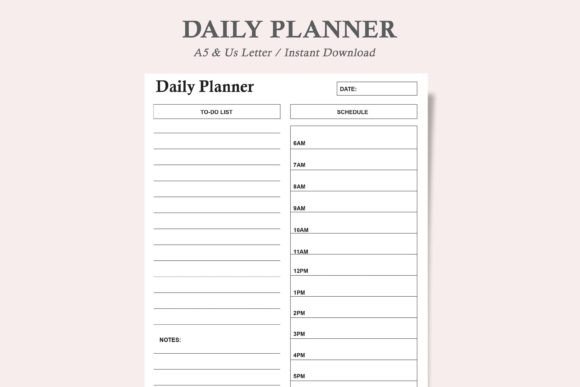
- Daily, Weekly, and Monthly Self-Care – three tiers of intention-setting, because self-care isn’t just a once-a-month checklist.
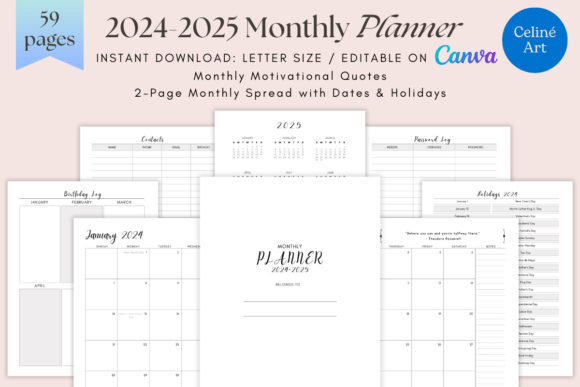
- Monthly Planner (January–December) – dedicated spreads that let you map appointments, goals, and self-care priorities together rather than in silos.
- Self Care Planner, Tracker, and Checklist – a trio that helps you plan, follow through, and audit your activities over time.
- Mood Tracker & Anxiety Journal – spaces designed to observe emotional trends without judgment, helping you identify triggers and patterns that might otherwise go unnoticed.
- Gratitude Journal – a practice linked repeatedly to improved resilience and mental outlook.
- Exercise Log & Meditation Tracker – physical and mental fitness tracked side by side.
- Healthy Meal Planner – because nutrition plays a quiet but potent role in emotional stability.
- Declutter Checklist – environmental wellness matters; tidying physical space often rearranges mental space.
- Budget Tracker – financial stress is a leading contributor to anxiety; giving it visibility within a self-care context reduces its power to ambush you.
- Habit Tracker & Daily Review – micro-commitments reviewed each evening reinforce a sense of agency.
- Notes – open pages for journaling, brainstorming, or capturing insights on the fly.
- Thank You Page – a small nudge toward appreciation that closes the planner on a graceful note.
That’s 34 different template designs, each 100% original, crafted with a consistent aesthetic that feels calm but not overly decorative. The design uses CMYK color, which means what you see on screen translates accurately to print, avoiding the washed-out surprise that sometimes comes with RGB-only files.
The Evolution of Self-Care Planning and Why 2024 Demands More
If you trace the arc of the wellness industry, you’ll notice a clear graduation. A few years ago, self-care was often equated with indulgence—bubble baths, occasional spa days, permission to disconnect. Today, especially as remote and hybrid work blur the boundaries between professional and personal life, self-care has been redefined as preventative mental health maintenance. The 2024 Mental Health Self-Care Planner reflects this maturation. It doesn’t just ask you to relax; it asks you to track, plan, and review your behaviors with the same seriousness you’d apply to a project at work. For freelancers and entrepreneurs, whose income often correlates with their well-being, this is not a luxury—it’s risk management. For educators and bloggers, who pour emotional labor into their audiences, a structured self-care practice prevents compassion fatigue.
The inclusion of a Budget Tracker and Declutter Checklist alongside the more expected Mood Tracker and Meditation Tracker is a nod to real life. Stress is rarely a single-source problem. It accumulates when you’re worried about an invoice, sleeping in a chaotic room, eating hurried meals, and ignoring a lingering sense of unease. By bringing these apparently separate domains into one planner, the tool encourages you to see connections: a week of poor sleep (visible on a Habit Tracker) coincides with lower mood (visible on a Mood Tracker) and overspending on takeout (visible on the Budget Tracker). That data isn’t meant to be weaponized against yourself; it’s meant to spark gentle, targeted adjustments.
How the Editable Canva Link Empowers Different Users
One of the most practical aspects of the 2024 Mental Health Self-Care Planner for Canva is the freedom to adjust content before you print a single page. Say you’re a therapist who wants to add a small practice logo to the Belongs To Page or swap the 2024 Holidays section for a list of school break dates if you’re a parent. Maybe you’re a content creator who wants to use the planner as a bound giveaway for a retreat, and you need to tweak colors to match your brand. The editable Canva link removes the friction. This isn’t just a static PDF; it’s a starting point. The 34 templates remain as crisp, original foundations, but you have creative license to refine them. This feature also future-proofs your investment. If you decide to use the planner next year with updated dates, a few quick edits in Canva could adapt the calendar pages without starting from scratch—though the current design is tailored specifically for 2024.
The download package includes high-quality JPG and PNG files alongside the PDF. This multi-format delivery matters. Maybe you want to import a single Daily Self-Care sheet into a digital note-taking app like GoodNotes or reMarkable for tablet-based journaling. Or you might use a PNG of the Anxiety Journal page as a daily check-in graphic on your phone’s lock screen for a week. The options extend beyond a bound paper notebook, meeting users where they actually live—across devices, apps, and paper.
Embedding the Planner into a Modern Routine
For many professionals, the gap between knowing self-care is important and actually doing it stems from a lack of integration. The planner’s structure closes that gap. Instead of trying to remember five different apps and notebooks, you have one location. A small business owner might fill in the Monthly Planner with client deadlines, then immediately check the Self Care Checklist to ensure a morning walk or a five-minute breathing exercise hasn’t been edged out. A creative professional facing a project pitch could use the Anxiety Journal to dissect nerves into manageable facts, then flip to the Exercise Log to schedule a high-intensity workout as counterbalance. The proximity of these sections reduces the mental load of context-switching.
The Daily Review page is perhaps the quiet engine of the system. In just a few lines each evening, you reflect on what went well and what could improve. Over weeks, patterns emerge. You might notice you consistently rank your day higher when you’ve completed even a ten-minute Meditation Tracker entry. Or that your mood dips on days when the Healthy Meal Planner was ignored. These aren’t profound revelations—they’re gentle reminders that self-care isn’t all-or-nothing. The planner helps you tweak rather than overhaul, which is a far more sustainable approach for busy adults.
Production Quality That Matches Intent
Because the 2024 Mental Health Self-Care Planner is designed at 300 DPI with CMYK color and no bleed, the final printed result rivals what you’d find in a boutique stationery shop. The 8.5 x 11 inch size provides plenty of writing room without becoming unwieldy. You can bind the sheets in a three-ring binder, take them to a spiral-binding service, or simply use a clipboard and work through the months one at a time. The high resolution ensures that even the fine lines on the Mood Tracker grids or the Habit Tracker boxes remain crisp. For someone who values the sensory experience of pen on quality paper, this matters. It elevates the daily self-care check-in from a chore to a small ritual.
And because it’s 100% original design, you’re not getting a template that feels generic or cobbled together from clip art. The aesthetic is cohesive across all 34 templates, with enough variety to keep the pages visually interesting without becoming distracting. The Declutter Checklist has a different visual rhythm than the Gratitude Journal, but they share a design language that makes the whole planner feel like a unified system.
The inclusion of a Thank You Page is more than a polite wrap-up. In the context of self-care, gratitude directed outward reinforces the internal practice you’ve been cultivating. It reminds you that well-being is also relational—supported by the people, opportunities, and small kindnesses that fill a year.
Who Benefits Most and Why It’s a Timely Investment
While the 2024 Mental Health Self-Care Planner is universally usable, it particularly resonates with adults who find themselves in hybrid roles: the marketing manager who is also a parent, the freelance writer who doubles as a community organizer, the graphic designer who coaches others on the side. These blurred identities require a steady anchor. The planner’s combination of scheduling, tracking, and reflective journaling helps contain the mental spillover from one role to another. When you see everything—finances, meals, moods, exercise—on adjacent pages, you stop treating your life as separate compartments and start managing energy as a whole resource.
From a market perspective, the demand for such tools is only growing. People are increasingly looking for resources that honor their intelligence: planners that don’t just offer pretty layouts but embed psychological principles subtly into their design. The 2024 Mental Health Self-Care Planner does exactly that. It normalizes tracking anxiety without stigmatizing it. It places budget tracking next to meditation tracking without implying one is less spiritual than the other. That integrated, honest approach is what modern users expect. They are tired of wellness products that ignore financial stress or living environment. They want something like this—practical, non-preachy, and customizable via the Canva link to fit their exact circumstances.
For anyone who has ever bought a beautiful journal only to abandon it by mid-February, the combination of pre-structured templates and DIY editing makes a real difference. You can adjust the format until it feels like yours, which increases the likelihood you’ll stick with it. The year 2024 will undoubtedly bring its own share of uncertainty; having a daily touchpoint with a tool that grounds you in intentional action is a quiet form of resilience.
In essence, the 2024 Mental Health Self-Care Planner is not just a collection of pages. It’s a year-long companion that meets you exactly where you are—whether you want a fully printed binder, a selectively printed set of the Monthly Planner and Mood Tracker, or a digital adaptation using the JPG and PNG files within your favorite tablet app. It respects your time, your complexity, and your commitment to staying well through the seasons. And because the editable Canva link puts the final creative control in your hands, it becomes a truly personal tool, not a one-size-fits-all formula. In a time when mental health is finally being discussed openly, having a planner that feels both professional and deeply human is exactly what so many people have been looking for.