Family Toy Memory Log Book KDP: What You Need to Know
Toys carry stories. A worn-out teddy bear might hold decades of bedtime whispers. A wooden train set could be the center of a childhood universe. The Family Toy Memory Log Book KDP interior gives those stories a permanent home. Instead of letting memories fade, this log book invites families, collectors, and creators to record the details that make every toy special. It’s a practical tool designed as a print-ready template for Kindle Direct Publishing, so you can turn a simple idea into a beautiful, usable book.
If you’ve ever looked at a box of old toys and wished you had written down their origins, who played with them, or why they mattered, this log book solves that problem. It’s not just a blank notebook. Every page is structured to guide you through capturing the essence of each item, making it easy even for beginners to create a meaningful keepsake.
What Exactly Is the Family Toy Memory Log Book?
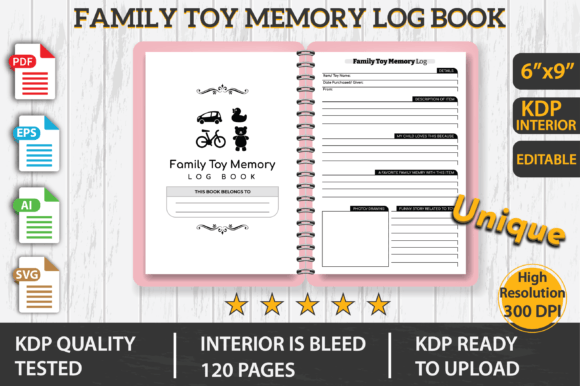
At its core, the Family Toy Memory Log Book KDP interior is a professionally designed layout that you can upload directly to Amazon KDP and publish as a physical paperback. The package includes everything a self-publisher or content creator needs: a 120-page file with a unique, clean design, set at 6×9 inches (15.24 x 22.86 cm) with full bleed. That means your artwork and page elements can extend right to the edge of the trimmed page, giving the finished book a polished, professional look.
More than a template, it’s a thoughtfully organized memory journal. It includes an intro page that establishes ownership (“This book belongs to…”) and then page after page of dedicated space to note the toy’s name, its origin, the child or family member who loved it, memorable moments, and even a spot for a small sketch or photo description. The consistency of the design helps users stay organized without feeling overwhelmed.
What really sets this interior apart for creators is the editable source file bundle. You receive the project in PDF, EPS, AI, and SVG formats. You can adjust fonts, swap graphics, add your own branding, or change the color scheme to match a series of family memory journals. Once you’re happy with the tweaks, a high-resolution print-ready PDF is ready to go—tested on KDP to ensure it passes the platform’s stringent review process with no errors.
Why a Toy Memory Log Feels So Relevant Right Now
Many of us crave tangible connections in a digital world. A physical log book sits on a shelf, gets passed around during family gatherings, and ages gracefully alongside the toys it documents. For adults in their 20s to 50s, nostalgia is a powerful force—whether you’re a new parent wanting to record a baby’s first plush friend, a grandparent preserving the story of a vintage doll, or a hobbyist cataloguing a growing collection.
This log book supports several emotional and practical goals. It helps parents document a child’s developmental milestones attached to specific playthings. It aids toy collectors who want provenance and personal anecdotes tied to each piece. It empowers families to create a legacy item that can be handed down. And it does all this without requiring any artistic skill—just a willingness to write down what you see and feel.
Practical Ways to Use the Log Book at Home
Many users first approach a memory log with good intentions but no clear system. The structured pages of this interior eliminate that hesitation. Here’s how different people bring it into their daily lives:
- New parents can document each meaningful toy from the first year, noting when it was received, from whom, and the child’s reaction. Over time, this becomes a priceless baby book alternative.
- Grandparents often rescue toys from attics and want to pass them down with context. The log book lets them record the bygone era the toy came from, its original owner, and why it was loved.
- Downsizing households use the log to decide which toys to keep. Writing about an item often clarifies its emotional weight, making it easier to let go of things that lack deep meaning.
- Homeschool families integrate the log into projects about history, materials, or storytelling. A simple pull-along wooden toy becomes a lesson in craftsmanship and childhood across generations.
- Couples combining households discover each other’s childhood favorites and use the book to blend those stories into a shared family narrative.
In each case, the log book acts less like a formal archive and more like a conversation starter. Filled pages become stories that can be read aloud, laughed over, and revisited every holiday season.
How Creators and Small Businesses Can Turn It into a Product
Beyond personal use, the Family Toy Memory Log Book KDP interior opens a lane for entrepreneurs, coaches, and content creators. Self-publishing on Amazon KDP continues to grow, and niche memory journals sell surprisingly well when marketed to the right audience. You could brand this interior as your own, add a custom cover with your design style, and publish it under your imprint. Because the source files are editable, you retain full creative control.
Consider these business-friendly applications:
- A family lifestyle blogger publishes the log book as a companion to a blog series on mindful parenting or minimalist toy collections.
- A professional organizer uses the interior to create a client-facing keepsake product, bundling it with decluttering services.
- A toy store owner offers a branded edition as a premium freebie or low-cost add-on that deepens customer loyalty.
- An early childhood educator adapts the layout into a classroom memory book, sending copies home at the end of the year filled with photos and notes about each child’s favorite playtime activity.
Because KDP handles printing, shipping, and customer service, you can experiment with low risk. The interior’s print-ready PDF has already been tested on KDP, meaning you won’t hit formatting roadblocks that often frustrate first-time publishers. You simply upload, preview, order a proof copy, and adjust any tweaks via the editable AI or EPS files.
Understanding the Design and Technical Side
It’s worth highlighting a few features that make the publishing process smoother. The 6×9 inch dimension hits a sweet spot—large enough to write in comfortably but compact enough to store on a bookshelf. The 120-page count gives users room for roughly 30 to 40 toy entries if each spread covers one toy, though you can always expand by duplicating pages in the editable file.
The mention of bleed matters if you’re new to print design. With bleed enabled, background colors or images run edge-to-edge after trimming, avoiding unsightly white borders. The included files are set up correctly, so you won’t need to rebuild margins. And because the interior has been tested on KDP, it eliminates the trial-and-error common with reformatting generic templates.
For those comfortable with Adobe Illustrator or similar software, the AI, EPS, and SVG formats are a playground. You could redesign the header font, insert subtle toy-themed icons, or add a gentle patina effect to the background for a vintage feel. If you prefer not to touch the design at all, the ready-to-use PDF still delivers a clean, modern look that appeals to a broad audience.
Who Gains the Most from This Log Book
We’ve touched on many audiences already, but it helps to see the common thread. This interior works for anyone juggling material nostalgia and a desire to organize memories. That includes:
- Stay-at-home parents who want a low-pressure creative project after the kids are asleep.
- Freelancers and remote workers looking for a side-income stream through KDP without starting from scratch.
- Etsy sellers who design printable memory journals and can use the editable SVGs to craft a digital download variant.
- Seniors and retirees who finally have time to document a lifetime of collected treasures.
- Scrapbookers and crafters who love to embellish but want a solid foundation to build on.
The broad appeal matters. When you market a finished book based on this interior, you’re not speaking to a tiny niche. Childhood toys, sentimental keepsakes, and family stories are universal themes that easily cross demographic lines.
Key Considerations Before You Start
As straightforward as the product is, a few practical points can make your experience better. First, decide whether you’ll use the log book for personal enjoyment or commercial publication. If publishing, be mindful of how you present the interior. The editable files allow you to place your own copyright page, ISBN details, and branding. Failing to personalize those elements can make your book feel generic, so take advantage of the ability to change whatever you want.
Next, think about paper and ink. KDP offers cream or white paper options. Cream paper often feels warmer and more nostalgic, aligning nicely with a family memory theme. The interior works with both, but you may want to tweak any background elements in the source file to ensure they complement the paper tone without becoming muddy.
Pay attention to the intro page. The “belongs to” page is a small but powerful touch. It immediately personalizes the finished book and signals to the user that this is their story to fill. If you’re creating a brand around memory preservation, you can keep that page intact or embellish it with a short, heartfelt message to the reader.
Finally, if you’re new to KDP, understand that while the file is error-tested, you must still navigate Amazon’s upload system. Review the platform’s cover requirements and always order a physical proof before making your book public. The interior handles the inside beautifully; your job is to wrap it in a compelling cover that matches the caring tone of the log book.
Making the Log Book a Living Part of Your Family Culture
Once printed, this isn’t a one-time activity. Some of the most meaningful uses come from revisiting the log book year after year. Families might pull it out on a child’s birthday and add a new toy entry. Grandparents can update it after a meaningful gift-giving occasion. Over time, the book becomes a living document of a family’s ever-evolving relationship with play.
You could even pair the log book with a small photo album or a digital cloud folder of toy images. Mention the reference in your entries, and suddenly the simple notebook connects to a richer multimedia record. This kind of integration feels modern while honoring the slow, intentional act of handwriting.
Whether you’re filling it yourself or publishing it for others to discover, the Family Toy Memory Log Book KDP interior stands out because it balances structure and freedom. It gives just enough guidance to prevent blank-page paralysis, yet the clean layout leaves room for personal expression. The included editable formats future-proof your investment, allowing you to evolve the design as your audience’s needs change.
Toys will always be more than objects. They are time capsules, comfort items, and bridges between generations. A well-made memory log doesn’t just preserve facts—it captures the feeling of a well-loved toy, and that emotional resonance is exactly what makes this interior valuable for families and creators alike.