Designing a Bipolar Therapy Anxiety Planner for KDP
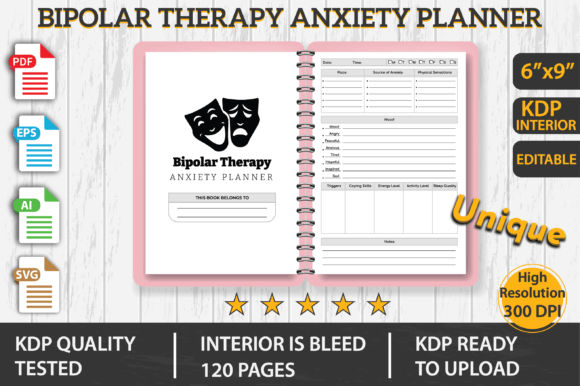
When you stumble on a KDP interior that’s been thoughtfully structured, tested, and delivered with all the mess already cleaned up, it’s worth a closer look. That’s exactly what the Bipolar Therapy Anxiety Planner brings to the table. It’s a 120-page interior designed for people who need something gentle, predictable, and genuinely useful. Whether you’re a publisher exploring the mental wellness niche, a designer building out a client’s low-content brand, or a blogger turning your own content into a physical workbook, this resource removes the heavy lifting so you can focus on the parts that matter most.
The file set is refreshingly practical: a ready-to-upload PDF that’s been tested on KDP with zero errors, plus editable source files in AI, EPS, SVG, and PDF formats. That means you don’t have to guess about margins, bleed, or trim. The dimensions—8.5 x 11 inches and 8.25 x 11 inches with bleed included—cover both popular US layouts, so you’re not locked into one spec. For anyone who’s stared down a KDP rejection email over a mismatched margin, that peace of mind alone is worth a lot.
Visual Clarity That Supports Calm, Not Chaos
Most planners for mental health end up either overly clinical or bizarrely cheerful, with neon dot grids and mismatched script fonts that feel jarring. This interior takes a different path. The design leans into clean, structured minimalism without becoming sterile. Headers sit in a modern serif that reads as warm and approachable—the kind of typeface you’d see in a carefully printed companion journal, not a disposable worksheet. Body text uses a neutral sans serif that keeps things legible even when someone is struggling with focus or overwhelm, which is a real consideration for this audience.
The visual hierarchy is handled with ease. Page numbers, section dividers, and prompt labels are distinct without shouting. There’s enough white space to prevent cognitive overload, yet each page feels anchored, not floaty. From a design-strategy perspective, that’s a smart move. A bipolar therapy anxiety planner lives or dies by how it meets a reader who might be fatigued, distracted, or emotionally drained. Cluttered pages with decorative flourishes and tight leading can make someone shut the book. This interior respects that reality.
Where This Planner Fits in Your Creative Ecosystem
Low-content publishing on KDP has matured, and generic interiors don’t cut it anymore. This planner fills a niche that blends wellness, self-care, and professional therapy support—a zone where authenticity and editorial tone really matter. If you’re building a brand around mental health tools, the interior works as a flagship product or a companion to a guided journal, a course workbook, or even a therapist’s office resource.
Beyond Amazon, the editable source files make it easy to repurpose the layout for small-batch print runs, Etsy printables, or membership site bonuses. A designer, for example, could relayer the color palette, swap in a hand-lettered display font for chapter headers, and brand the whole thing under a client’s visual identity. The bones are professional, so you’re not rebuilding from scratch. A blogger could populate the content with their own prompts, gratitude check-ins, or mood tracking scales that reflect their unique voice. That flexibility transforms a single KDP interior into a long-term design asset.
Typography Choices That Quietly Build Trust
The type inside this planner doesn’t just look nice; it communicates something about who the publisher is. When you’re serving an audience managing bipolar disorder and anxiety, the smallest visual details shape the perceived reliability of the tool. A quirky handwritten font might seem friendly at first, but if it sacrifices readability or feels gimmicky, trust erodes. The typeface pairing here—serif headings that feel grounded, sans serif body text that flows without friction—creates a subtle message: “This was made with care, by someone who understands.”
If you choose to adjust the fonts after downloading, that message is yours to amplify. Imagine swapping the original serif for a softer, slightly more decorative serif font that still holds strong vertical stress and open counters. Or layering a gentle script font as a subheading accent on the intro page, then pulling back so it never distracts from the core prompts. That kind of intentional font pairing elevates a planner from a utility item to a cohesive brand experience. And when you’re selling on KDP, that small bump in perceived quality can move a product from the browse-and-forget category into repeat purchases and bundle opportunities.
Leveraging the Editable Files for Brand Identity
One of the quiet strengths of this Bipolar Therapy Anxiety Planner KDP interior is that it isn’t locked into a single visual personality. The included AI, EPS, and SVG files mean you can open it in Illustrator or Affinity Designer and treat the whole thing as a blue-sky template. Maybe your brand leans into earthy, botanical tones; you can adjust the color of divider lines and section labels in minutes. Maybe your audience skews younger and responds better to a slightly playful vibe; you can introduce a modern geometric sans serif for the headers and keep the body text crisp.
There’s also a strategic reason to customize: differentiation. KDP search results for “anxiety planner” are crowded with covers that look identical and interiors that feel interchangeable. By making even modest typographic and color adjustments, you create a product that sits beside the competition and clearly belongs to your brand’s world. A custom intro page, a subtle pattern treatment behind the date fields, or a unique treatment for monthly divider pages can make all the difference. Because you control the editable source files, the speed from concept to published product is dramatically faster than starting from scratch.
Real-World Testing and the Quiet Confidence of a KDP-Approved File
Anyone who has wrestled with Amazon’s automated checks knows the dread of an upload failure right before a launch. This interior has already been tested on KDP, so the bleed settings, trim size, and margins pass without a hiccup. Both the 8.5×11 and 8.25×11 dimensions are safe zones, giving you a little room to adjust for customer expectations. That pre-testing is more than a convenience; it’s a practical safeguard against the back-and-forth that can delay a release by days.
For a bipolar therapy anxiety planner, publishing friction is the last thing you want. Your audience might be stepping into this tool during a fragile moment, and a product that’s “temporarily unavailable” or pushed back due to technical errors can break the connection before it begins. Having a file you can trust to go live smoothly lets you focus on the things that actually grow your presence—cover design, keyword optimization, and building a helpful product description that resonates.
Reading the Room: When to Use This Planner (and When Not To)
This interior shines when the end user needs a structured, non-judgmental space to track moods, reflect, and plan. Its page count—120—gives enough room for depth without becoming overwhelming. That’s a sweet spot for daily check-ins over a three- to four-month period. But it’s worth imagining your specific audience: if your community already uses a highly visual, illustrated journal style with watercolor elements and more expressive layouts, the minimal skeleton here might feel too restrained. In that case, the editable files become your playground. You can retain the logical flow and structure while injecting a bolder color palette, custom icons, or a friendlier handwritten font for the prompt text.
For publishers who want to bundle this with a complimentary workbook or a set of affirmation cards, the interior’s visual language is easy to extend. Its clean typography and uncluttered layout mean an accompanying gratitude journal or daily log can borrow the same header styles and spacing rules to feel like part of a family. That kind of thoughtful consistency nudges browsers into becoming loyal customers who recognize your design language across products.
Making Typography Work Harder for Readability and Emotional Impact
In the context of anxiety management, even the way a sentence lands on a page matters. Line length, paragraph breaks, and font weight collectively influence how digestible the content feels. This planner uses short, scannable lines and generous leading—a choice that lets a reader absorb a prompt without feeling rushed. If you adapt the interior, keep that emotional intelligence in mind. Resist the urge to shrink the font to cram more content; the negative space is part of the therapeutic value. A premium serif font with a slightly larger x-height, for instance, can boost readability without making the page feel crowded. Equally, a sturdy sans serif often outperforms a delicate display font when someone is filling out entries on a tired evening.
Pairing type from different families can also introduce a gentle rhythm. Perhaps keep the emotional tone of the intro page and section headers with a refined modern serif, then anchor all the functional elements—date lines, tracker boxes, note spaces—with a reliable geometric sans. That contrast creates a gentle pause between the reflective and the practical, which mirrors the way many people navigate therapy and self-care tools.
Beyond the Download: Building a Cohesive Low-Content Brand
Acquiring a polished KDP interior like the Bipolar Therapy Anxiety Planner is a smart shortcut, but it becomes truly powerful when you view it as the starting block, not the finish line. Consider how the design can scale: can the same header style and color logic appear on a sleep tracker, a medication log, or a weekly therapy prep sheet? Creating a small suite of products around a shared brand identity amplifies your presence in search results and builds a recognizable world on Amazon.
Also worth revisiting is the licensing. Because editable source files are included, you’re free to adapt the interior into new products, experiment with different covers, and even offer customized variants for coaching clients or a private practice. That kind of commercial flexibility goes beyond what a static PDF template typically offers. It means you’re not just buying a layout; you’re getting a design framework that can grow alongside your publishing goals.
For the creative professional who operates at the intersection of design and mental wellness, this planner interior solves a genuine problem: how to create a beautiful, accessibly designed therapy tool without reinventing every wheel. The files are solid, the design is empathetic, and the path from download to live listing is refreshingly short. That’s the kind of resource that saves both time and creative energy—two things no one has enough of.