Cover Camping Logbook KDP Cover: Editable Canva Templates for Camper Journals
Publishing a camping logbook on Amazon KDP is a practical way to turn outdoor enthusiasm into a passive income stream or a branded tool for a camping community. Yet many creators hit a wall when it comes to designing a cover that meets KDP’s trim size requirements, looks professional, and stands out in a crowded marketplace. The Cover Camping Logbook KDP Cover template set addresses exactly that gap—giving you three fully editable Canva designs sized at 17.58 x 11.25 inches, with the freedom to adjust colors, shapes, and typography. You also get a matching interior template, so you can assemble a complete, print-ready camping journal without hiring a designer or learning complex software.
What the Cover Templates Actually Include
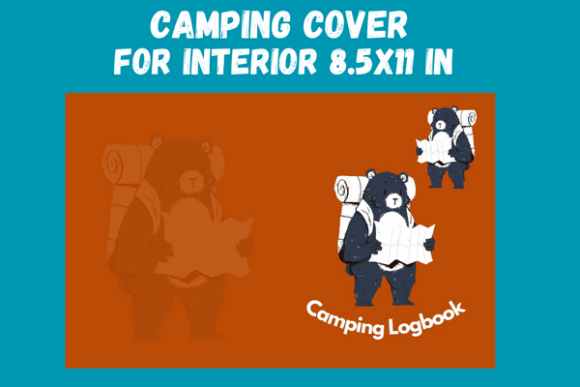
Instead of a single static file, you receive three distinct KDP cover layouts built in Canva. Each cover follows the same generous 17.58 by 11.25 inch dimension, a common size for 6×9 paperback interiors with standard bleed requirements. The designs share a camping and outdoor aesthetic but vary in composition and visual weight, giving you options for different logbook themes—simple minimalist, rustic adventure, or family-friendly styles.
All templates are structured so you can swap background images, alter color palettes, reshape graphic elements, and replace placeholder text with your own title and subtitle. Because Canva operates in a browser, there is no software to install, and you can work from a laptop or tablet. The tool also provides access to thousands of free or low-cost photos, icons, and fonts, which means you can extend the templates far beyond the original look.
Alongside the covers, you will find a Canva template for the campers logbook interior. This includes ready-made page layouts—lined pages, trip logs, gear checklists, campsite rating spreads, and blank note sections. You can combine, duplicate, or delete pages to create exactly the journal your audience wants. Everything ties together under a single visual theme, so the final product feels cohesive and trustworthy.
Why a Ready-Made KDP Cover Matters More Than You Think
On Amazon, the cover is the first—and often only—marketing tool a low-content book has. Shoppers skim thumbnails quickly. If the cover looks amateurish or difficult to read at small sizes, potential buyers scroll past, no matter how useful the interior pages are. The Cover Camping Logbook KDP Cover designs are built for that split-second test. Their layouts place the title clearly, use legible fonts, and incorporate visual cues—tents, trees, compasses, mountain silhouettes—that immediately signal “camping journal.” This reduces hesitation and can increase conversion rates simply because the listing communicates value before a single word of the description is read.
Many first-time publishers underestimate the technical side of KDP cover creation. A cover must accommodate exact spine width based on page count, include 0.125-inch bleed, and sit within safe zones for text. The provided templates already handle these proportions for a standard 120-page interior, but you can readjust the spine thickness inside Canva if your final page count differs. This alone saves hours of trial and error and helps avoid print rejections due to trimming or alignment issues.
KDP Entrepreneurs Scaling a Low-Content Brand
If you already sell notebooks, journals, or planners on Amazon and want to expand into the outdoor niche, the Cover Camping Logbook KDP Cover template gives you a head start. You can launch a family camping journal, a solo hiker’s trip log, an RV travel diary, or even a campground review notebook under a single brand umbrella. Because all three covers live in Canva, you can unify them with your existing brand colors and logo, then quickly generate variations for A/B testing or seasonal themes—autumn foliage, summer lakes, winter snowscapes—without starting from scratch each time.
Educators, Scout Leaders, and Camp Organizers
Not every camping logbook needs to be a commercial product. Troop leaders, outdoor education instructors, and summer camp coordinators often create custom journals for participants. With this bundle, you can design a personalized logbook that includes camp rules, activity logs, nature observation pages, and reflection prompts. The ability to pick other colors and shapes within Canva means you can match the camp’s identity. Since the interior template is also editable, you can rearrange pages to suit a week-long program or a single weekend retreat, then print copies locally or share a digital version.
Bloggers and Influencers in the Camping Niche
Camping bloggers, YouTubers, and Instagram creators routinely look for unique merch or digital products to offer their followers. A branded camping journal designed using the Cover Camping Logbook KDP Cover template can become a lead magnet, a Patreon reward, or an affordable Amazon product linked from your content. Because Canva’s collaborative features allow you to share templates, you could even let a virtual assistant handle the final edits while you focus on content creation. The professional appearance lends credibility, and the low upfront cost keeps the experiment low risk.
Practical Advantages of Working Inside Canva
Choosing a Canva-based template over Adobe InDesign or Photoshop removes a steep learning curve. The drag-and-drop environment feels intuitive, and the platform offers built-in guidance on alignment, spacing, and color contrast—helpful if you lack formal design training. For KDP purposes, you export a print-ready PDF with the correct dimensions and bleed marks already in place. Canva’s background removal tool helps if you want to insert your own camping photos, and the vast library of illustrations lets you add compass icons, pine trees, campfires, or starry skies that reinforce the outdoor theme.
Another overlooked advantage is version control. When you start with the Cover Camping Logbook KDP Cover, you can duplicate the project inside Canva and experiment with drastically different color schemes, typography, or layout arrangements. If a variation doesn’t work, your original remains untouched. This encourages creative exploration without the fear of ruining a finished design—something that’s invaluable when you tweak a cover to appeal to van-lifers versus family campers versus backcountry hikers.
How the Coverage Sizes and Shapes Fit Your KDP Plan
The 17.58 x 11.25 inch template accommodates a full wrap—front cover, spine, and back cover—for a 6×9 inch interior, which remains one of the most popular trim sizes for paperback journals. If your interior page count changes, you can adjust the spine width by moving the guide marks in Canva and slightly repositioning text. The template’s layered structure makes this straightforward; you aren’t forced to rebuild anything from scratch.
The ability to choose other colors and shapes is more than a cosmetic perk. A cover that works brilliantly for a general camping logbook might need to shift in tone for a wilderness survival journal or a kids’ camping activity book. With the base design, you can recolor the background from earthy greens to sunset oranges, swap a tent icon for a cabin silhouette, or turn a rectangular frame into a circular badge accent. These small decisions can help your product appear in more specific search results because the cover visually matches the sub-niche—something Amazon’s algorithm indirectly values through click-through and conversion signals.
Realistic Considerations Before You Publish
While the templates offer a strong foundation, they aren’t a one-click guarantee of bestseller status. Your success still relies on solid keyword research, a clear description, and an interior that truly serves the camper’s needs. It may also help to review Amazon’s content guidelines for low-content books, especially around repetitive interiors. The interior Canva template provides varied page types, which can help you meet the “substantial differentiation” requirement, but you should still add enough unique content—prompts, illustrations, tips—to avoid the “poor customer experience” flag.
Additionally, Canva’s free tier gives you access to thousands of assets, but some premium images or fonts require a Pro subscription. If you are on a tight budget, you can still create a polished cover using only free elements or by uploading your own photography. The framework of the Cover Camping Logbook KDP Cover handles all the structural heavy lifting, so you won’t need to pay for extra design resources unless you want a highly specific stock photo.
Putting the Interior to Work Alongside the Cover
One frequent mistake is designing a gorgeous cover and then leaving the interior as a disconnected set of plain lines. The included editable Canva interior template solves this by giving you a unified visual language. Headers, footer accents, and page number treatments can mirror the cover’s typography and color accents. For example, if you change the cover’s main color to navy blue with gold accents, you can apply the same palette to interior section breaks, log entry titles, and decorative dividers. The result is a book that looks custom-designed from first glance to last page, which influences buyer reviews and return rates.
When This Template Might Not Be the Best Fit
If your camping logbook idea requires a highly specific illustration style—such as hand-drawn watercolor animals throughout—you may need to supplement the template with commissioned artwork. The base covers lean toward clean, modern graphic styles that work well for broad audiences, but extreme niche aesthetics might feel mismatched. Similarly, if you intend to publish a hardcover version through KDP’s case laminate option, you’ll need a different template because hardcover dimensions and wrap calculations differ. In such cases, use this bundle as a layout reference and source a complementary template designed for hardcover production.
Another scenario to consider: very large page counts beyond 200 pages. The spine recalculations become more involved, and while Canva can handle the resizing, you’ll need to double-check bleed and spine alignment carefully. Amazon’s cover calculator tool becomes an essential companion here.
Streamlining Your Publishing Workflow
Once you have customized the Cover Camping Logbook KDP Cover and interior in Canva, the path to publication is straightforward. Export the cover as a PDF (with bleed and crop marks if available), and export the interior as a separate PDF. Upload both to KDP during the book setup process. Use Amazon’s online previewer to verify that text falls inside safe zones and that any barcode placement on the back cover doesn’t obscure important design elements. Because the template was designed with KDP specs in mind, these checks usually pass on the first attempt.
If you plan to publish multiple camping logbooks—say a basic trip log, a family camping memory book, and an RV maintenance log—you can reuse the same core structure. Open the original cover template, apply a new color scheme and subtitle, rearrange the interior pages, and you have a new product in a fraction of the time it would take to start from zero. This repeatable approach is what makes the Cover Camping Logbook KDP Cover not just a one-time asset, but a foundation for an entire publishing line.
Tapping Into the Growing Camping and Outdoor Market
Camping participation has consistently grown, and with it, the demand for analog tools that enhance the outdoor experience. Campers want to disconnect from screens but still record memories, track site quality, or log mileage. A well-designed logbook meets that need while giving the publisher a chance to build authority around a specific type of camping—dispersed camping, national park road trips, family campgrounds, or minimalist ultralight adventures. The Cover Camping Logbook KDP Cover templates give you the visual flexibility to target any of these segments without hiring separate designers for each.
The template also lowers the barrier for someone who isn’t a full-time publisher. A camping enthusiast with a good idea for a journal can go from concept to live Amazon listing in a single weekend. By removing the design bottleneck, it allows more people to share useful, thoughtfully crafted products with the camping community—and that ultimately enriches the entire niche.