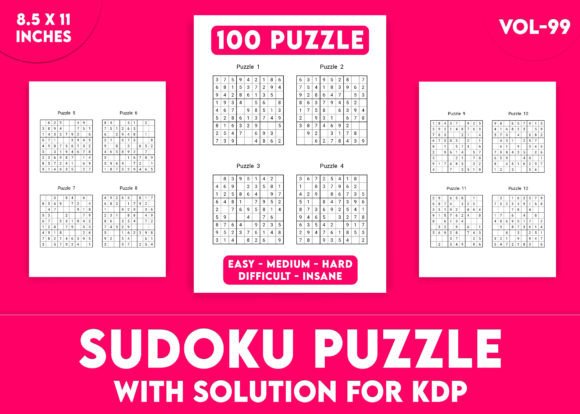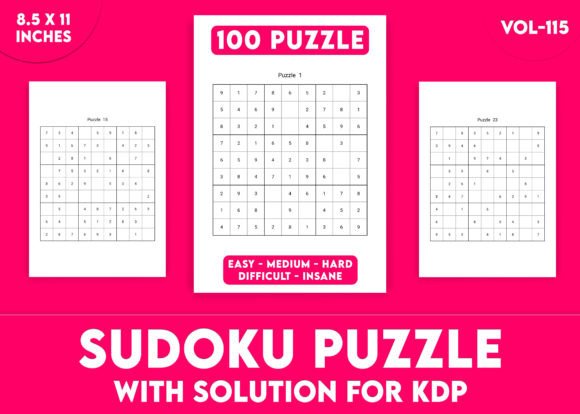
Sudoku Puzzles for KDP Interior Vol-115
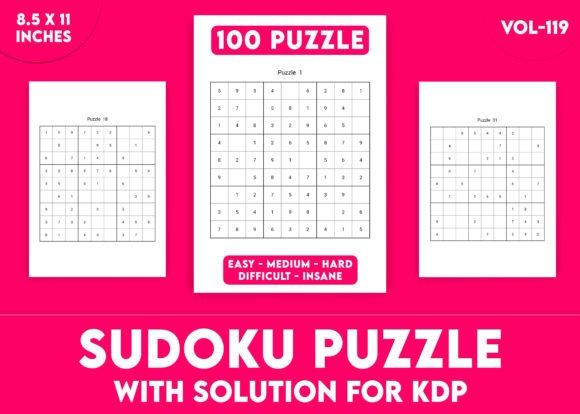
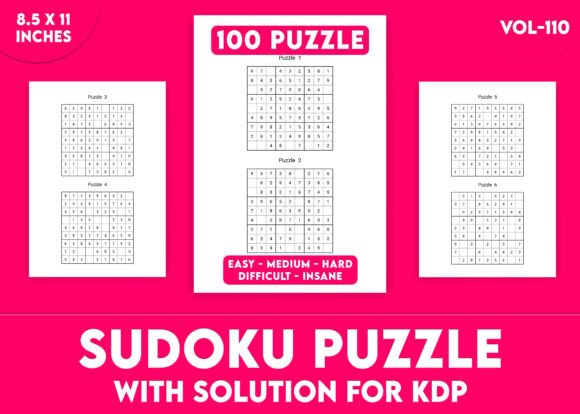
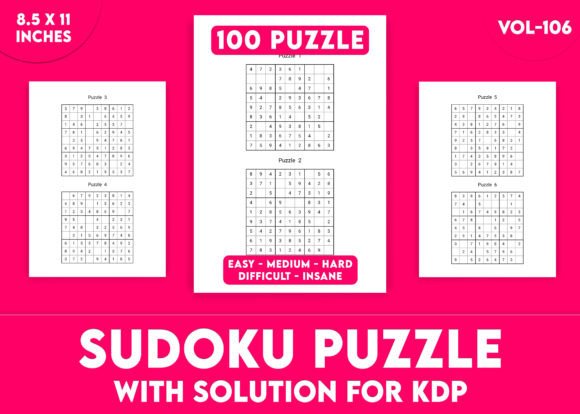
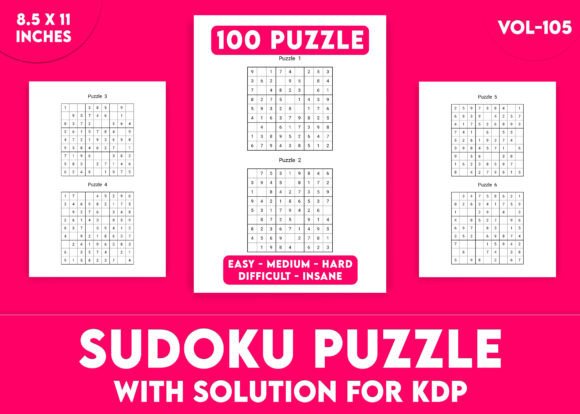
Getting a print-ready puzzle book from a blank screen to a live Amazon listing can feel like a marathon of formatting, testing, and late-night tweaks. Sudoku Puzzles for KDP Interior Vol-115 changes that equation entirely. It is a carefully assembled digital interior file, created specifically for Kindle Direct Publishing. Inside you will find 100 original Sudoku puzzles, complete solutions, and a fully editable PDF template set to a generous 8.5 × 11 inch page size. The goal is simple: give you a reliable, high-quality foundation so you can focus on cover design, branding, and reaching your audience—without getting tangled in puzzle creation or layout headaches.
This product lives at the intersection of logic, design, and commerce. For some, it is a fast lane to passive income. For others, it is a creative sandbox. And for a growing group of educators, coaches, and leisure enthusiasts, it is a way to share a mentally engaging activity with a community. Let’s unpack what makes this resource tick, who stands to gain the most from it, and how different people might evaluate its worth depending on their goals.
What Exactly Is the KDP Interior Vol-115?
At its core, it is a downloadable package that contains everything needed to publish a professional Sudoku book through Amazon KDP or similar print-on-demand platforms. You receive a ready-made interior PDF and source files that you can edit using standard software like Adobe Acrobat, Affinity Publisher, or even free PDF editors. The 100 puzzles are arranged with a clean, readable grid layout on 8.5 × 11 inch pages—large enough to allow comfortable pencil solving while keeping the final printed book a standard, marketable trim size. Solutions follow the puzzles, making the book complete and user-friendly right out of the box.
Because the file is editable, you can adjust fonts, margins, or add your own copyright page, branding, or even a personal dedication. The puzzles themselves are balanced: challenging enough to engage an adult mind without veering into frustration, yet solvable with logical steps rather than brute-force guessing. This middle ground is deliberate—it caters to the widest possible segment of casual puzzle fans, from daily commuters to retired seniors keeping their cognitive skills sharp.
Who Finds Value in a Ready-Made Sudoku Interior?
People approach a product like this from vastly different angles. A freelance graphic designer, for example, might see it as a time-saving client deliverable. A stay-at-home parent exploring side income might view it as a low-risk entry into e-commerce. A seasoned KDP publisher looks at it through the lens of scaling a portfolio quickly. And a teacher or activity director may simply want a custom puzzle book for a specific group. All of these perspectives are valid, and the same features serve each one in a distinct way.
Understanding your own primary motivation will help you use this interior more effectively. Are you optimizing for speed to market? Do you need absolute creative control over every visual element? Is your main concern the long-term credibility of your puzzle brand? Let’s see how different users might answer those questions.
The First-Time KDP Publisher
If you have never uploaded a book interior to KDP before, the process can be intimidating. Margins, bleed, gutter settings, and image resolution are real technical demands. Sudoku Puzzles for KDP Interior Vol-115 removes that initial barrier. You download a file that is already sized and formatted correctly for 8.5 × 11 inch books. This means you avoid early mistakes like content shifting near the spine or text being clipped at the edges. For a beginner, the biggest priority is often ease of use and a predictable outcome. Being able to open a PDF, check it looks right, and upload it immediately builds confidence and drastically shortens the learning curve.
The Experienced Low-Content Publisher
Veterans in the KDP space think in terms of systems and scale. They know that a single well-received puzzle book can fund the launch of five more. For them, reliability and consistency matter above all. They are not looking for a one-off novelty; they need a template they can trust to hold up across multiple books in a series. The editable nature of this interior lets them maintain a consistent brand while swapping out puzzle sets or adding unique front matter. They might adjust the header style to match an existing series or insert a QR code linking to a newsletter. The speed gain is significant: instead of spending days constructing grids and checking solutions, they can move from idea to publication in a single afternoon.
Designers and Creative Professionals
Graphic designers and layout artists often get asked by clients to create custom activity books for corporate gifting, wellness programs, or niche audiences. Here, flexibility is king. An editable PDF source allows the designer to change typefaces, add the client’s logo, insert color accents for special editions, or rearrange the order of puzzles. The underlying puzzle quality must be impeccable because the designer’s reputation is attached to the final product. A single unsolvable Sudoku or a missing number in a solution grid can trigger negative reviews that reflect poorly on the designer’s professionalism. Having a verified, tested set of 100 puzzles gives them the confidence to present the work proudly.
Educators and Activity Coordinators
Not everyone who buys a puzzle interior wants to sell it on Amazon. Some want to print limited copies for a senior center, a math club, or a long flight activity kit. A high school math teacher might use the puzzles as warm-up exercises that strengthen logical deduction skills without feeling like homework. In these scenarios, quality of life features become paramount. The large 8.5 × 11 inch format means plenty of white space for notes. Solutions included at the back allow self-checking, which respects the user’s independence. And the editable file means the teacher can remove the cover page template or add the school’s name without fuss. The commercial value of the book is irrelevant here; the learning value and engagement matter most.
Mapping Priorities to Features
When evaluating whether this interior aligns with your project, it helps to break down common priorities and see how the product addresses each one. Everyone weights these differently, and that is exactly how it should be.
Time Savings. For anyone from a busy parent to a full-time entrepreneur, the hours reclaimed by not hand-crafting 100 puzzles and formatting them for print are enormous. This is frequently the top reason buyers cite. You do not need to master Sudoku generation algorithms or pay a freelancer to create puzzles one by one. The interior is a finished asset.
Cost-Effectiveness. Compared to hiring even a modestly priced puzzle creator or purchasing multiple smaller puzzle packs, a single comprehensive interior with 100 puzzles and solutions usually represents better value per puzzle. The fact that it is editable also means you can reuse the layout structure for future volumes by swapping in new grid content if you choose, amplifying the long-term return.
Presentation and Professionalism. A book that looks clean, balanced, and easy to read stands a better chance of converting a browser into a buyer. The interior layout is thoughtfully designed with ample margins and clear grid lines. The large 8.5 × 11 inch size avoids cramped puzzle cells, which is a common complaint in poorly formatted Sudoku books. Good presentation reduces returns and boosts customer satisfaction.
Flexibility and Creative Control. An editable PDF is more than a static document. It is a canvas you can modify. You might add subtle background patterns, change the solution section header, or insert a difficulty rating page before each puzzle section. This flexibility is especially important for publishers who want to differentiate their book in a competitive niche.
Reliability and Accuracy. Puzzle integrity is non-negotiable. Every Sudoku must have a unique solution reachable through logic. The interior has been checked, so you can trust that solvers will not hit dead ends. This reliability protects your book ratings and builds your brand over time.
Putting It to Work: Real-World Examples
Consider a few ways different people might use this product in practice.
- An Etsy seller prints and binds the puzzles as a physical notebook, adding a custom leather cover, and sells a premium tactile product offline.
- A retirement community coordinator edits the file to include the community’s name and a welcome message, then prints a monthly puzzle booklet for residents.
- A travel blogger creates a road trip activity book by combining these Sudokus with crosswords and word searches from other interiors, branding everything under their blog’s theme.
- A corporate wellness consultant uses the interior to design a “Mindfulness & Logic” booklet, replacing the standard title page with stress-management tips and company values, then distributes it during mental health awareness week.
- A KDP publisher launches a “Sudoku Master Series” with three volumes, using Vol-115 as the anchor product and slightly modifying the layout for consistency across the series.
Each of these use cases demands something slightly different from the product. The seller needs commercial quality. The coordinator needs simplicity and legibility. The blogger needs mix-and-match compatibility. The consultant needs editability. The publisher needs scalability. The design of this interior supports all of them because it does not lock you into one rigid output.
Is This Puzzle Collection Right for Your Next Project?
Deciding whether to invest in an interior like this comes down to a few honest self-checks. Answering these questions will help you avoid mismatched expectations and wasted effort.
First, ask yourself about your end goal. Are you building a long-term publishing brand, or do you need a one-off custom puzzle book for a specific event? This interior suits both, but your return on investment calculation will differ. For brand building, the ability to edit and re-theme the file for multiple books is a significant advantage. For a single event, the time saved alone might justify the purchase.
Second, consider your technical comfort level. Do you know how to make basic edits to a PDF, or are you willing to learn a few simple tools? The file is editable, but you should not expect to achieve magazine-level graphic design changes without the right software. However, adding text, changing fonts, or deleting a page is straightforward. If you need a completely code-customizable source, you might look for a different format, but for 95% of users, the editable PDF provides more than enough control.
Third, evaluate your audience. If your target readers prefer easy, gentle puzzles, the “challenging” nature of these Sudokus might need a small adjustment—you could easily add a page that clarifies the difficulty level or combine these with easier puzzles from another source. But if you are serving an adult audience that enjoys a satisfying mental workout, this collection hits a sweet spot. The large format also indicates you are prioritizing usability, which appeals to older solvers and anyone who dislikes tiny grids.
Finally, think about quality expectations. A low-quality puzzle interior will show its flaws quickly through customer complaints. The solutions must be correct, the grids clear, and the overall feel polished. Do not underestimate how much trust a clean, large-print page builds. When a customer opens your book and sees crisp grid lines and well-spaced numbers, they immediately assume care went into the rest of the book too. That initial perception influences reviews and repeat purchases.
Beyond the Transaction: Building a Puzzle Ecosystem
One underappreciated strength of a product like Sudoku Puzzles for KDP Interior Vol-115 is how it can act as a cornerstone for a broader creative or business ecosystem. Once you have a reliable interior, you can easily produce variations. A paperback version for one demographic, a spiral-bound edition for another, a digital PDF version sold on your own website—all from the same core file. You can brand the book under one pen name, and later release a “travel size” version by scaling the layout (though careful testing is needed). The point is, the asset is not a dead end. It multiplies your options.
For creators who also teach, you can use the editable file to create a free lead magnet—a ten-page sample booklet—that grows an email list. For community builders, a custom puzzle book can be a unique membership perk. The product’s value stretches far beyond a single Amazon listing when you approach it with a little imagination.
Stepping into Sudoku publishing does not require you to be a puzzle genius or a design wizard. It asks for a clear vision of who you want to serve and a willingness to present a high-quality product. If you have been searching for a dependable, attractive interior that respects both your time and your audience’s intelligence, this collection deserves a close look. It strips away the technical friction so you can spend your energy where it counts: sharing a genuinely enjoyable logic challenge with the world.