Counseling Treatment Plan KDP Interior
Navigating the space between a simple PDF download and a fully formatted Amazon KDP book can feel like walking a tightrope. At the center of that path sits the Counseling Treatment Plan KDP Interior—a ready-to-use, 120-page template designed to bridge the gap between a therapist's need for structured intake tools and a publisher’s need for a flawless print file. Whether you plan to upload a mental health assessment journal to Kindle Direct Publishing, fill it out yourself on an iPad using GoodNotes, or hand it to a client during a session, this template gives you the foundation without the formatting headaches.
What’s Really Inside the Archive
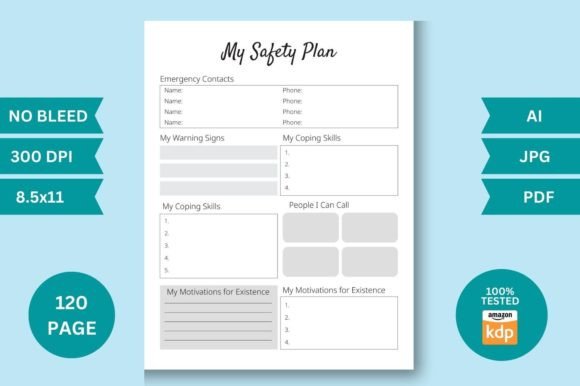
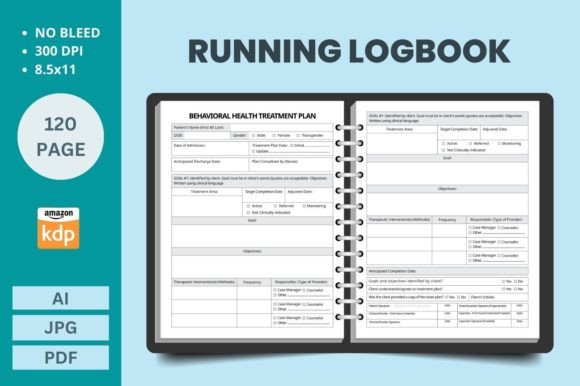
When you open this resource, you aren’t getting just a single page or a generic PDF. The download includes multiple file formats—JPG, EPS, and PDF—all sized at 8.5 x 11 inches, 300 DPI, with no bleed and a clean, distraction-free layout. The interior spans 120 pages built around a counseling treatment plan structure: sections for client goals, intervention strategies, progress notes, symptom checklists, and mental health assessments. Because it’s print-ready and tested on Amazon KDP, you can skip the trial-and-error many creators face when their margins, trim, or resolution don’t pass the platform’s automated checks.
For therapists and coaches who prefer digital annotation, the fillable nature of the PDF makes it compatible with apps like GoodNotes, Notability, or even basic PDF readers that support text entry. This opens up two very different paths: a print-first journey for a low-content book business, or a paperless, interactive method that helps a practitioner stay organized across dozens of clients.
Who Finds Value in a Treatment Plan Interior
Not every reader approaches the same file the same way. A mental health blogger, a KDP entrepreneur, a school counselor, and a private practice owner might all download the same content—but for significantly different reasons. Understanding those varied motivations helps you decide if this template matches your current project or skill level.
The KDP Creator Looking for a Market-Ready Low-Content Book
If you sell journals, workbooks, or logbooks on Amazon, you know that low-content interiors can make or break a listing. Customers in the mental health space expect consistency and credibility. With this 120-page interior, you get a complete, polished foundation for a treatment planner you can brand, resize (within the provided EPS), and publish under your own label. The file checks all the KDP specifications—no bleed, correct size, high resolution—so the technical side of publishing vanishes. A creator can focus on designing a cover that matches, keyword research, and listing optimization. For someone who has struggled with interior formatting or had a manuscript rejected due to margin errors, the “tested on Amazon KDP” tag is more than a bullet point; it’s a time-saver that reduces frustration.
The Therapist or Coach Who Needs a Digital Assistant
A practicing clinician isn’t necessarily looking to publish a book. They want a repeatable, editable format that works across their devices. Filling out a counseling treatment plan during a telehealth session on a tablet or laptop can streamline note-taking and reduce paper clutter. Because the PDF supports fillable fields, a therapist can type client goals, save the file, and refer to it later without printing a single page. For those who meet clients in person, the same PDF can be printed on demand as crisp, professional worksheets. This dual-use nature matters when you’re juggling the speed of digital documentation and the tangibility of a paper form.
The Educator or Workshop Leader
Teaching counseling students or conducting a community mental health workshop often requires models that participants can take home. An editable, printable treatment plan template becomes a teaching aid: attendees see how a structured intake form maps to therapeutic models like CBT or solution-focused therapy. Rather than designing materials from scratch, an educator can pull pages from this interior, adapt the EPS file to fit a handout, and deliver consistent resources that mirror real-world documentation.
How Different Priorities Shape the Experience
Two people can download the same file and evaluate its worthiness based on completely separate criteria. Recognizing which priorities drive your own decision can prevent you from settling for a mismatched product.
Ease of Use vs. Creative Flexibility
Some users crave a plug-and-play solution: download the PDF, upload to KDP, and publish in an afternoon. For them, the JPG and PDF formats offer immediate, no-edit readiness. Others want to customize the typeface, move a header, or add a logo. The EPS file speaks to that audience. It provides vector-based editing that doesn’t sacrifice print quality, so a designer or advanced user can reshape the interior while keeping the 300 DPI sharpness intact. Beginners might never open the EPS file, and that’s perfectly fine—the product doesn’t demand advanced skills unless you want to stretch its potential.
Reliability and Commercial Value
If you invest time creating a book for Amazon, reliability isn’t negotiable. Hearing that the interior has been tested on KDP and sized without bleed removes the guesswork that frequently leads to returns or negative reviews. A marketer or entrepreneur values that assurance because it directly impacts the commercial lifespan of the book. Meanwhile, a private practitioner places less weight on KDP compatibility and more on whether the form captures the right clinical details—treatment goals, measurable outcomes, client identifiers. In that sense, the same file is evaluated through a lens of either financial return or clinical utility.
Practical Ways Different Users Put the Interior to Work
Let’s move beyond theory and consider a few concrete scenarios.
- The first-time KDP publisher downloads the interior, creates a simple cover in Canva, and uploads a “Therapy Progress Notebook” to Amazon. Within a week, they have a live listing that pays for the template cost several times over. They learn the ropes without technical headaches.
- A busy group practice manager saves the fillable PDF to a shared cloud folder. Therapists pull up the template on their tablets, complete the treatment plan with clients in the room, and save the file back to the client’s record—no scanning, no storage cabinets.
- A coach specializing in goal-setting extracts a few key pages from the EPS file, adjusts the headings to “Personal Growth Plan,” and prints them as a custom workbook sold alongside her coaching packages. The high-resolution output means it looks professional even when printed at a local shop.
What to Check Before You Decide
No single template fits every need, and a thoughtful buyer will match the interior’s features to their own project constraints.
- If your goal is a KDP low-content book: Confirm that the interior’s niche (counseling, mental health assessment) aligns with your target audience. Check that you’re comfortable uploading a print-ready file and that you have the rights to use the content commercially (standard with most template licenses). This interior takes the heavy lifting out of formatting, but you still need to craft a compelling cover and description.
- If you need a digital therapy tool: Test how the fillable fields behave on your device. While the PDF is editable, some note-taking apps may render fonts differently. The JPG files can serve as a backup—import them as templates in GoodNotes and write over them with a stylus.
- If you’re a multitool creator: Consider the EPS file as your sandbox. Recombine pages, tweak the layout language, or even repurpose select pages for a completely different workbook. Because the base design is clean and organized, alterations rarely break the professional feel.
Bridging the Gap Between Beginner Ambition and Professional Execution
There is a distinct point in every beginner’s journey where a finished interior turns an idea into something tangible. You might have researched keywords, understood the market, and sketched out a content outline, but without a polished, properly formatted interior, the project stays stuck in planning mode. This template represents that bridge—it allows someone with zero design experience to publish a book that looks intentional, and it gives an experienced designer a starting point they can reshape in minutes rather than days.
For those who lean more toward the consumer side—perhaps a client who buys a therapy workbook on Amazon—the benefit appears indirectly. They receive a clean, easy-to-use journal with thoughtful prompts and consistent spacing. That positive user experience traces back to the same high-resolution, no-bleed interior that passed KDP’s quality checks. In a marketplace flooded with poorly formatted notebooks, reliability at the source makes a difference.
Equally important, this interior doesn’t lock you into one medium. You can print it, sell it as a paperback, use it as a digital planner, or adapt select pages for client handouts. That level of adaptability matters when your needs shift—a student this semester may become a therapist next year, and a KDP experiment might turn into a full product line. The template doesn’t force a single path; it invites you to choose a starting point and evolve from there.